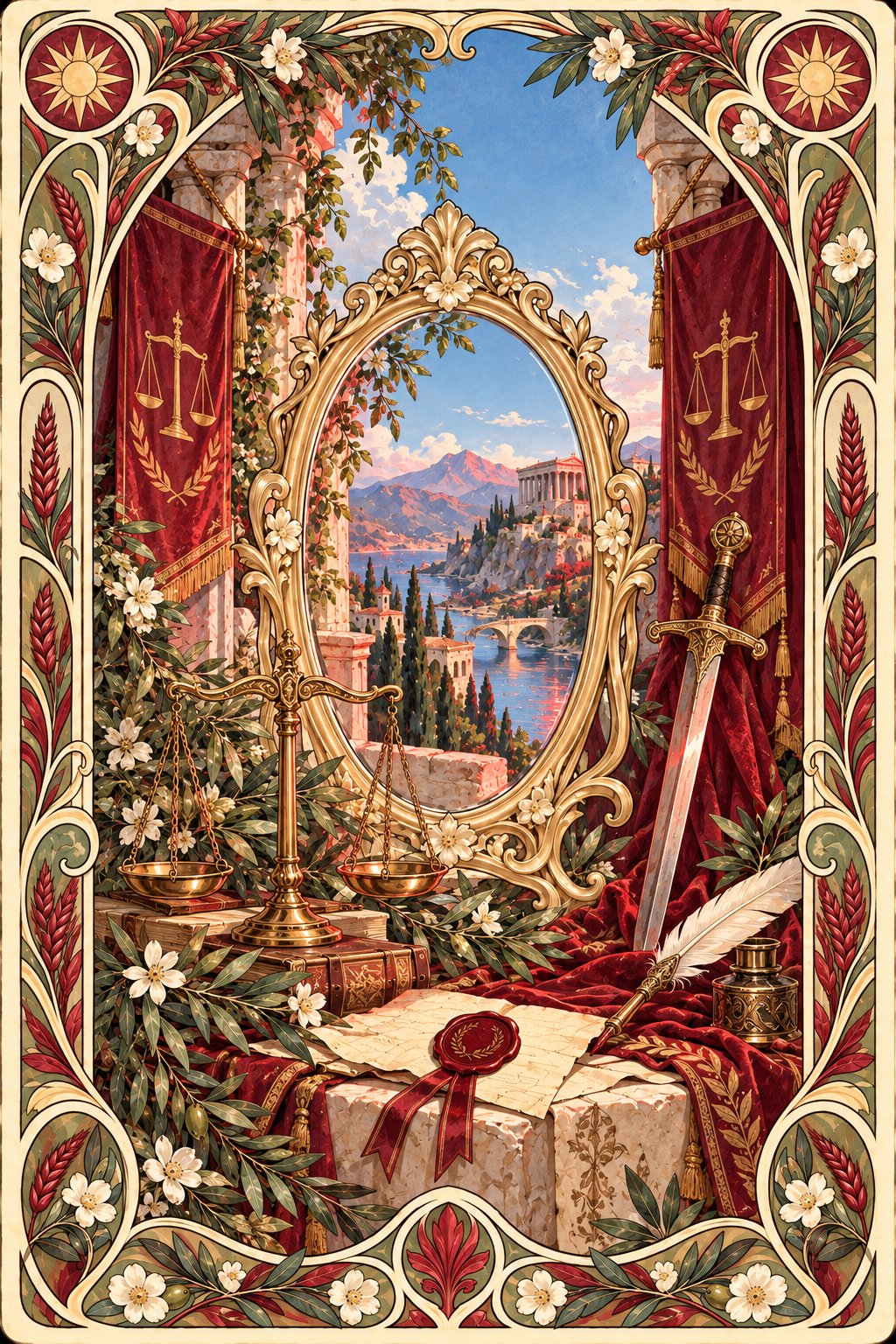
A sword is balanced across the scales, neither blade nor balance tilting the other. The hanging cloth behind the figure of Justice is drawn tight, its folds concealing and revealing, a partition between before and after. Noon sunlight rests on the table, leaving no shadows. Here, decisions are measured, and consequences gather with a quiet inevitability, as if summoned by the soundless turning of a pomegranate split in two.
In the annals of story and empire, the scales of law were once set upon the rich, dye-bearing fields between mountain and shore. Merchants brought jars from the coast, packed with dried bodies of tiny creatures harvested from saltwater tides, each one destined to stain wool and silk for the robes of magistrates and the altar cloths of cathedrals. In the bustling markets of Mediterranean towns, mordants and bolts of cloth changed hands; the trade itself becoming a ledger, each entry a question of debt and worth. On the court's benches, a judge’s mantle bore the mark of such labor—the color reserved for those who must weigh argument and consequence.
In the ancient myths, the sword of Justice parted not only truth from falsehood, but also flesh from rind: the fruit of the pomegranate, grown on dry hillsides, offered its seeds in neat order, each one a jewel and a promise. The fruit’s juice lingered on the lips of oath-takers, a taste linked to vows spoken beneath the midday sky. In cities where judgment was a daily ritual, glass goblets filled with claret from last autumn’s harvest were raised in toasts to verdicts delivered and fates decided, the drink staining napkins as surely as the judgment left its mark on those who came before the bench.
Across Eurasia, in the season when storms gathered over steppes and rivers, alchemists and shepherds alike kept records in ink pressed from the berries of ancient shrubs. Decrees and confessions, contracts and letters of mercy: all carried the trace of that dye. The ink’s permanence was both a gift and a threat. Once the feathered pen touched the parchment, there was no gentle erasing—only the slow work of time and water. These marks echoed the sword’s edge: severing, deciding, and carrying consequence forward.
Inside the home, the kitchen knife—a modest cousin to the ceremonial sword—splits fruit for the morning meal. A cloth, stained from last night’s wine, dries over the back of a chair, bearing witness to the unspoken negotiations of family. In the garden, the pomegranate tree’s arms bend with the weight of ripening fruit, each one a promise of division and sharing. The weather at midday is still and dry, the clouds hung far above, as if the sky holds its breath, waiting for the measure to be taken.
Today, one can peel a pomegranate and count its seeds in silence, or write a letter in the old style, using a fountain pen and thick paper. One might pour a cup of wine and reflect on a decision made, letting the surface settle before taking a sip. Or, folding a cloth neatly after washing, one remembers the hands that handled it before—a gesture of continuity, of history lived quietly at the edge of judgment.
Today's lucky color is Crimson.
Lucky Color: Crimson — #DC143CBalance invites clarity. Quiet ritual sharpens resolve.