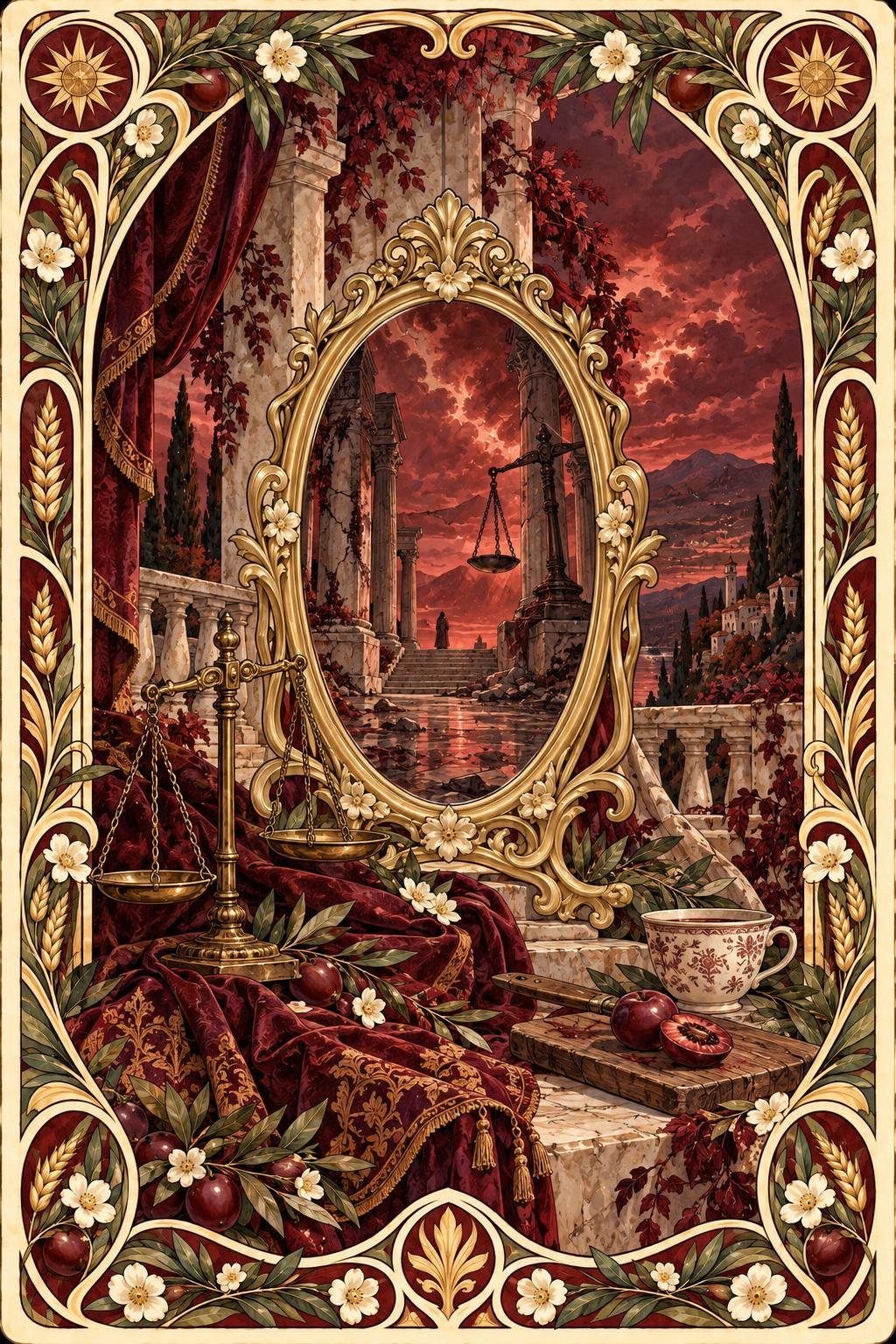
The figure sits on the high bench, empty robes pooling across the seat, the scales in her hand hanging crookedly. A draught moves through the room, making the bench creak and the heavy curtains sway. The sword, meant for swift clarity, leans unused against the pillar. No plaintiffs have come; the chamber, built for decisions, waits in silence. Outside, the courthouse square is swept with dried leaves—last season’s sumac and the fragments of chestnut hulls. Here, balance is postponed, not from confusion, but from absence. The air is thick, like the hour before a summer storm, when the clouds pile over the city and thunder is hinted but not yet voiced.
Elsewhere, in the hills beyond the city’s edge, a patch of earth holds the tangled roots of an old pomegranate tree. Its fruit, split and thick-skinned, lies scattered beneath, seeds shining among the fallen leaves. In another world, these seeds would be counted, weighed, and shared. Today, they rest where they dropped, left for the crows and small creatures who notice what people pass by. A thread of history runs through this neglected scene—a reminder of trade routes where dried fruit and spices were weighed by careful hands, each transaction trusted and witnessed. Now, the stalls are shuttered, the scales unused, the shopkeeper’s ledger incomplete.
Centuries ago, across the ocean, a cluster of ships left port in late autumn, carrying bolts of cloth dyed deep and lasting, woven with the care of a winter’s night. These textiles traveled far, traded in markets beneath stone arches and in dusty roadside inns, used to wrap scrolls of law, to mark the seats of elders, and sometimes to shield a wounded traveler from the cold. The fabric was a sign of authority—a signal that the proper order would be observed. But when the proper voice is missing, the cloth is only cloth, folded in trunks, forgotten behind locked doors. The merchant’s promise is unfulfilled, the contract unsigned.
In the highlands, the weather sometimes grows heavy just before dusk. Shepherds see it first, watching their flocks shift uneasily as the sky darkens and the wind rises, carrying the scent of wet earth and distant thunder. Lightning flashes, but the rain holds back, suspended. The balance between day and night, sun and storm, seems to falter for a moment. The shepherds know to gather their cloaks and steer the sheep toward shelter, but tonight someone is late returning. The flock waits, uncertain, on the open moor.
Inside the quiet house, a mortar and pestle rest unused on the kitchen shelf, their surface stained from the last grinding of spice. The cook is away, perhaps called to another duty, and the meal is not prepared. The ritual of the table—a loaf broken, a measure poured—will not happen tonight. In its place, the tools mark the intention, the procedure waiting for a hand to give it meaning.
If you wish, fold a length of that merchant’s cloth and set it beside your workspace, as a promise to complete what is left hanging. Leave a piece of pomegranate fruit in your window for the birds, as a gesture toward those whose presence is missing. Grind a small amount of spice in your mortar, even if no dish needs it, simply to honor the act unfulfilled. Pause at evening, listening for the storm that does not yet break, and remember to count what has been left waiting.
Today's lucky color is Maroon.
Lucky Color: Maroon — #800000Patience is sometimes the only witness.
Even in absence, intention leaves a trace.