The old card shows two figures at the base of a stone altar, each with a chain loose around the neck. A torch burns but does not catch, held high by a horned presence whose wings never move. The air is thick and unmoving, as if daring the chained ones to take their first step. But in this moment, the tension is gone; the chains hardly press, barely more than a memory. The figures sit, unmoved, fingers tracing the links that have become familiar. They could go, but stay.
Far from the cavern, in a valley where morning mist lingers, rows of slender plants cover the hills. Their scent is heavy, rising with the dew—something old, a smell that follows you indoors. Here, farmers walk slowly between their crops, brushing stalks and cutting bundles, placing them in baskets woven by hand. There is no rush. The work hums quietly, as if each motion is a meditation, a tiny release of tension learned from generations before. In the corners of stone cottages, dried stems hang from beams, filling the rooms with calm. Steam rises from a kettle on the stove, rolling over a cluster of stalks set in a shallow bowl. The room fills with a familiar aroma, a gentle, persistent presence.
In the ancient markets of Provence, bunches are stacked in neat pyramids, tied with twine, offered as comfort against moth and restless sleep. The merchant's hands are stained from the work, fingertips tinted by the oils as she arranges sachets and pillows, the smallest comforts for uneasy minds. Once, these hills knew war and plague, but always the fields returned, patient and resilient. There are stories of whole villages emptying, only to be reborn among these same rows of sturdy stalks. Each time, the harvest came back, as though the land itself remembered how to begin again.
Travelers come seeking peace—some for a night in a guesthouse where the bedding is filled with dried petals, some for a bowl of honey sweetened with the plant's essence. The winds move slowly over the fields, never harsh, bringing a gentle rain that coaxes out new shoots. In some years, the harvest is thin and the scent milder, but always enough for small gifts: a bar of soap, a pot of balm, a drop on the wrist before sleep. Old stories tell of healers who walked among the sick, carrying bundles tied at the stalk, whispering to the frightened that relief would come with the dawn.
In the city, a seamstress unrolls bolts of cloth that recall these fields. Each garment she makes holds a trace of rural quiet, sewn into cuffs and collars, a promise of calm held close to the skin. She keeps a sprig in her sewing kit, pressed under a glass lid, as if the simple herb could loosen whatever binds a person to sadness. For some, the scent is only a memory; for others, it is a call to let go of what no longer tightens.
Today, one might hang a sachet above the bed, or stir a spoonful of honey from the hills into tea. You could pause by a window where a pot of the old plant sits, brushing the leaves to lift the scent. You might slip a sprig into your coat pocket, a small, private anchor.
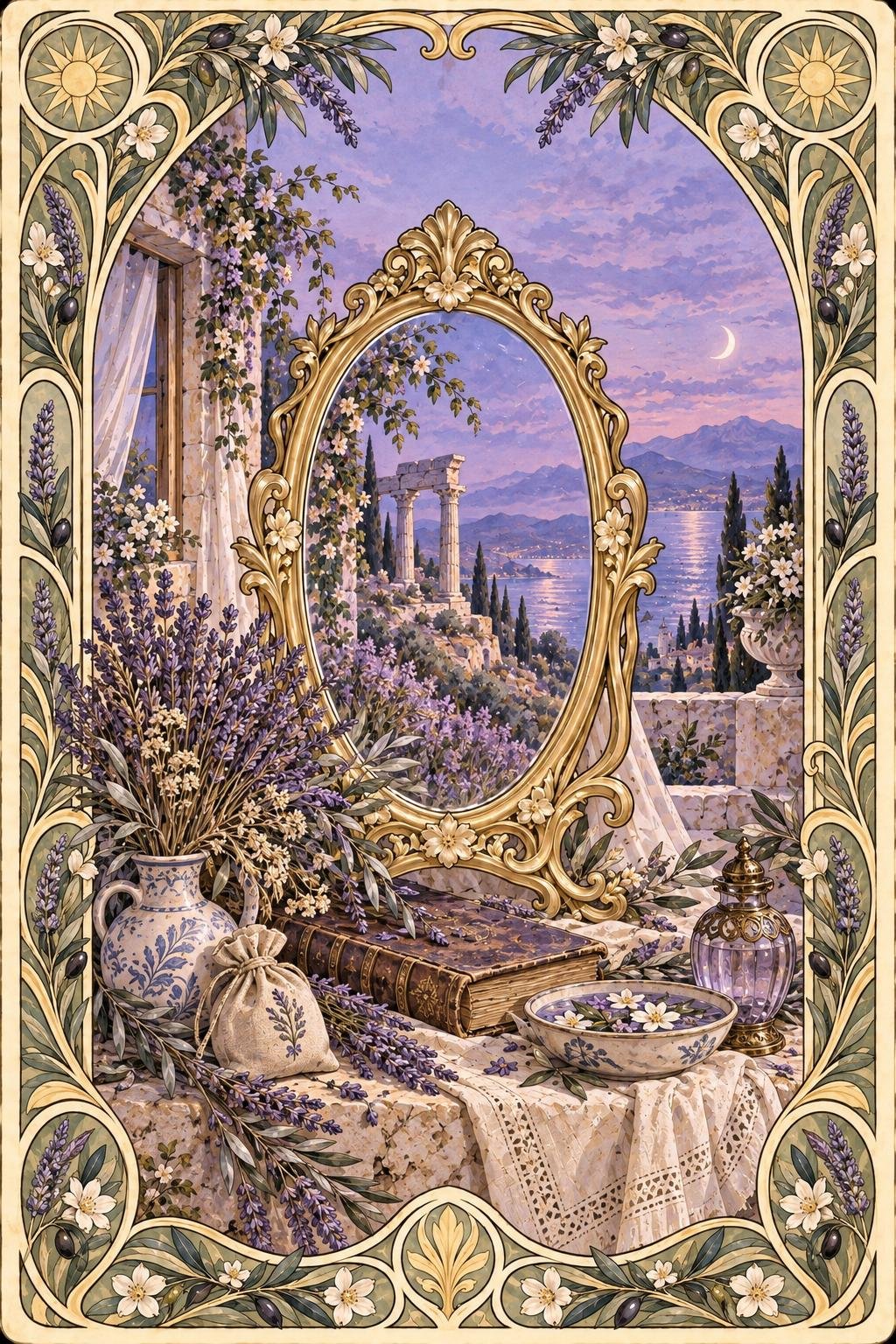
Today's lucky color is Lavender.
Lucky Color: Lavender — #E6E6FALet the old chains slip. The air is already light.