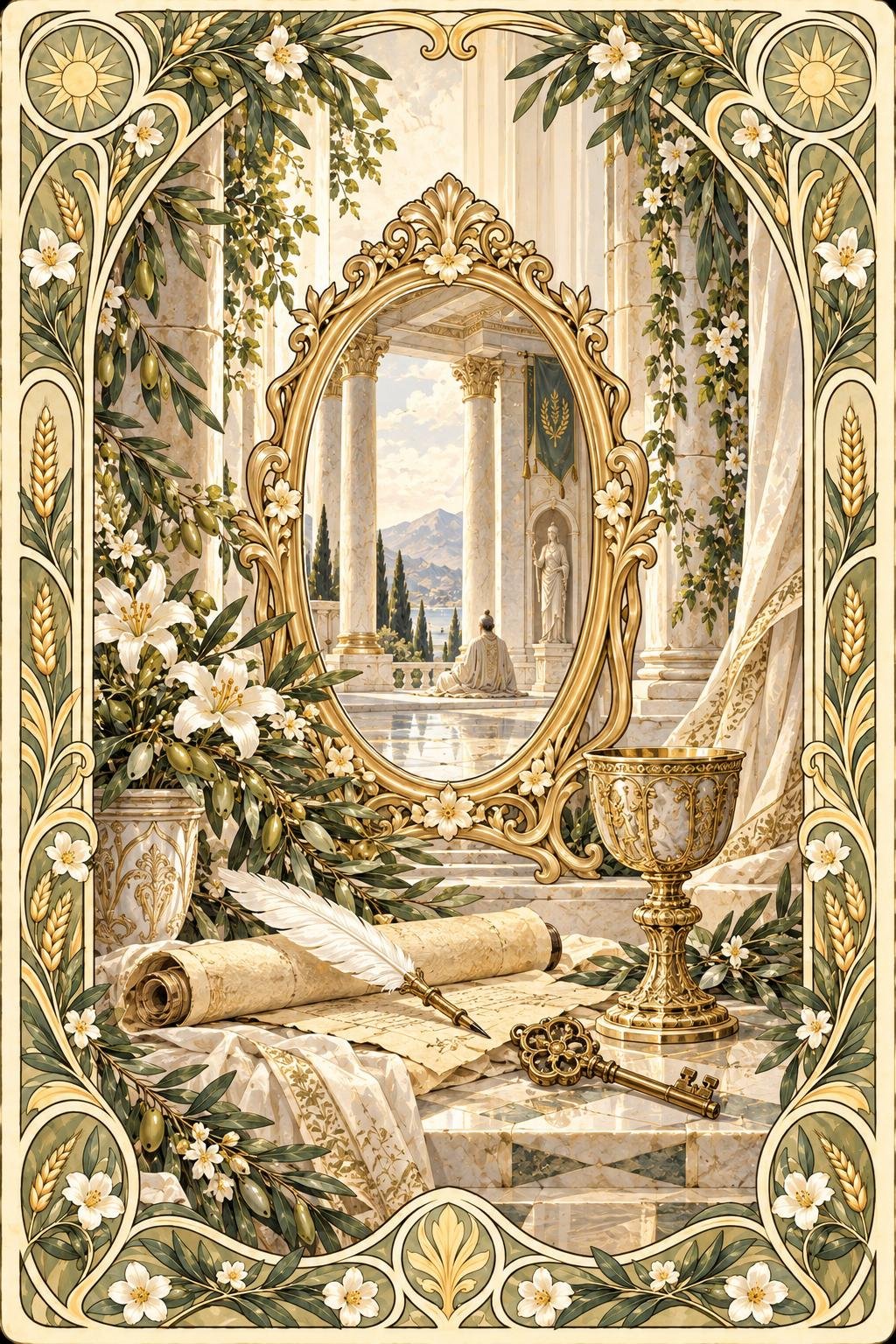
The temple takes shape in things handed down: a polished key, cool to touch, sits beside a folded stole whose edges ripple with the passing of years. Two figures kneel quietly, heads dipped, listening for the voice that comes not from the air but from the arrangement of ancient furniture, the hush of old porcelain on the altar, and the lingering fragrance of lilies in a wide-mouthed vase. Between stone pillars, the quiet ritual unfolds as it always has, each movement echoing the long memory of hands and hearts before.
In the old provinces, the great halls of learning were marked not just by the wisdom spoken, but by the things that bore silent witness. Here, an embroidered altar cloth, kept free of stain and carefully laundered with a sliver of soap shaved from a guest's gift, is smoothed before sunrise. Its surface is like the inside of a magnolia's petal or the crust of a pan of bread cooled on a windowsill—soft, carrying the warmth of a long, slow oven, not yet touched by the day’s dust. Early light comes in through high windows, illuminating the cracked glaze of a teacup, its rim setting a boundary for what is held and what is given away.
In the geography of ritual, the air is always mild in these moments. The room feels like April’s first clearing, when the frost is gone but warmth has not yet grown heavy. The priest or teacher’s hand moves with measured care, turning pages of a thick book whose paper, though touched by decades of dawn, still whispers when it bends. The attendants know the way of things: how to place the shortbread biscuits on a plate cooled from the pantry, how to pour milk from a small jug shaped like a flower, and how to sweep the floor so the dust does not rise.
Outside, the sky is blank with promise, and a faint scent of elderflower rides the air—a reminder of gardens tended behind high walls, where each petal falls in its own time. In the kitchen, a jug of cream waits for afternoon tea, its surface unbroken and promising plenty. The ceremony is not just in the words but in the careful laying out of linen napkins, the way bread is torn instead of cut, and how a guest’s plate is warmed before anything is served.
Tonight’s procedure is not invention, but inheritance—an exactness shaped by countless evenings before. Someone refills the sugar bowl shaped like an old farmhouse, its lid carved with small lilies. Another sets a vase with dogwood branches, the petals cool and smooth, almost translucent in the lamplight. The keys to the cupboards and drawers, handed down from grandfather or priest, still fit the locks because the shape of the tradition has not changed. It is a quiet thing, this order, unfolding as the night settles.
A person could polish the porcelain teapot before setting it out for a guest, or write a note with a fountain pen whose cap always returns to the same place in the desk’s shallow drawer. They might bake a loaf of bread to cool on a rack by the window, or press the folds of the old tablecloth until its surface is smooth as a petal.
Today's lucky color is FloralWhite.
Lucky Color: FloralWhite — #FFFAF0The hush of continuity lives in small, careful acts.
Let tradition be gentle this evening.