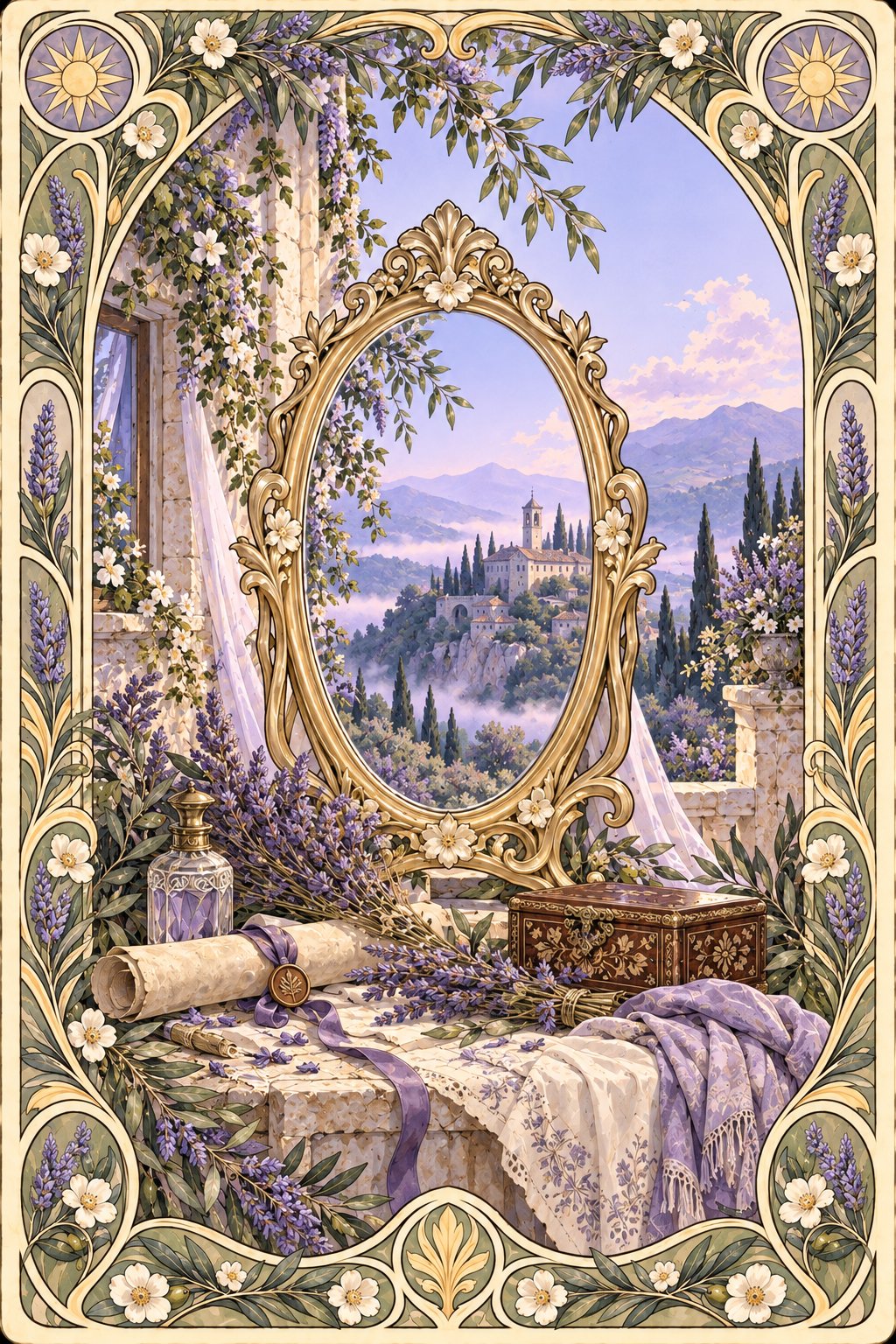
Two pillars, silent and unyielding, frame the entrance to a chamber where threads of knowledge hang in the air, half-seen. Between them falls a veil, woven so finely that the world beyond seems blurred, inviting quiet but refusing entry. At the foot of the pillars, a scroll rests in the High Priestess’s lap, its letters hidden by the gentle closing of its parchment. The scroll is sealed, not by wax but by the patient hush of waiting. Behind her, water lies still—a mirror holding secrets and the promise of reflection.
Beyond the chamber, in a land where the warm wind sighs through low hills, fields of an old, fragrant plant stretch almost as far as the eye can see. Long ago, monks carried bundles of this plant into stone-walled libraries, setting them in small bowls atop the manuscripts to protect the words from insects and dust. In the hush of those libraries, scholars turned pages while the scent soothed restless minds, guiding thoughts inward. This plant, with its slender stems and gentle spikes, lines the labyrinthine gardens of ancient monasteries, a border between cultivated space and the wild beyond.
These fields have drawn travelers for centuries, their paths marked by the soft hum of bees. In the marketplaces of southern France, bundles are tied with thread and sold beside honey and soap. The plant’s dried blossoms fill sachets tucked into drawers and wardrobes, pressed deep among linens, warding off moths and giving an old, calm air to the quiet corners of a house. In kitchens, sprigs steep in sugar to be folded into biscuits, or find their way into honey jars, infusing sweetness with something slow and floral.
In Roman times, water was poured over handfuls of these flowers before being poured into bathing pools, thought to ensure clarity of mind and purity of intent. When the sun is high, the fields shimmer under a thin morning mist, a brief weather that softens the outlines of every stem and petal. By late afternoon, the same plants may nod in the hush that settles after a summer rain, the air filled with a warm, clean scent.
There are places where women gather the flowers at dawn, the dew still clinging to their hands. Their baskets are woven from willow, shallow and broad, designed to let the air flow through as the harvest dries. In the cool shadow of storerooms, the flowers are hung from rafters, filling the air with a fragrance that lingers for months. Artisans gather the dried stems and weave them into wands, then tie them with ribbons for luck or given as tokens of peace. In the hush of a bedroom, a sachet sewn by hand is slipped under a pillow, inviting gentle dreams.
In the quiet, you might fill a small dish with dried blossoms and place it near your favorite chair as you read. You could infuse water with the petals and sprinkle it across the threshold of your home for a sense of calm. If you keep a journal, press a stem between the pages, letting memory and fragrance combine. Or you might simply sit beside a window, holding a cup of tea steeped with these flowers, to listen inward—waiting, as the High Priestess waits, for secrets to unfold.
Today's lucky color is Lavender.
Lucky Color: Lavender — #E6E6FATrust in what is gentle and hidden.
A day for quiet intuition.