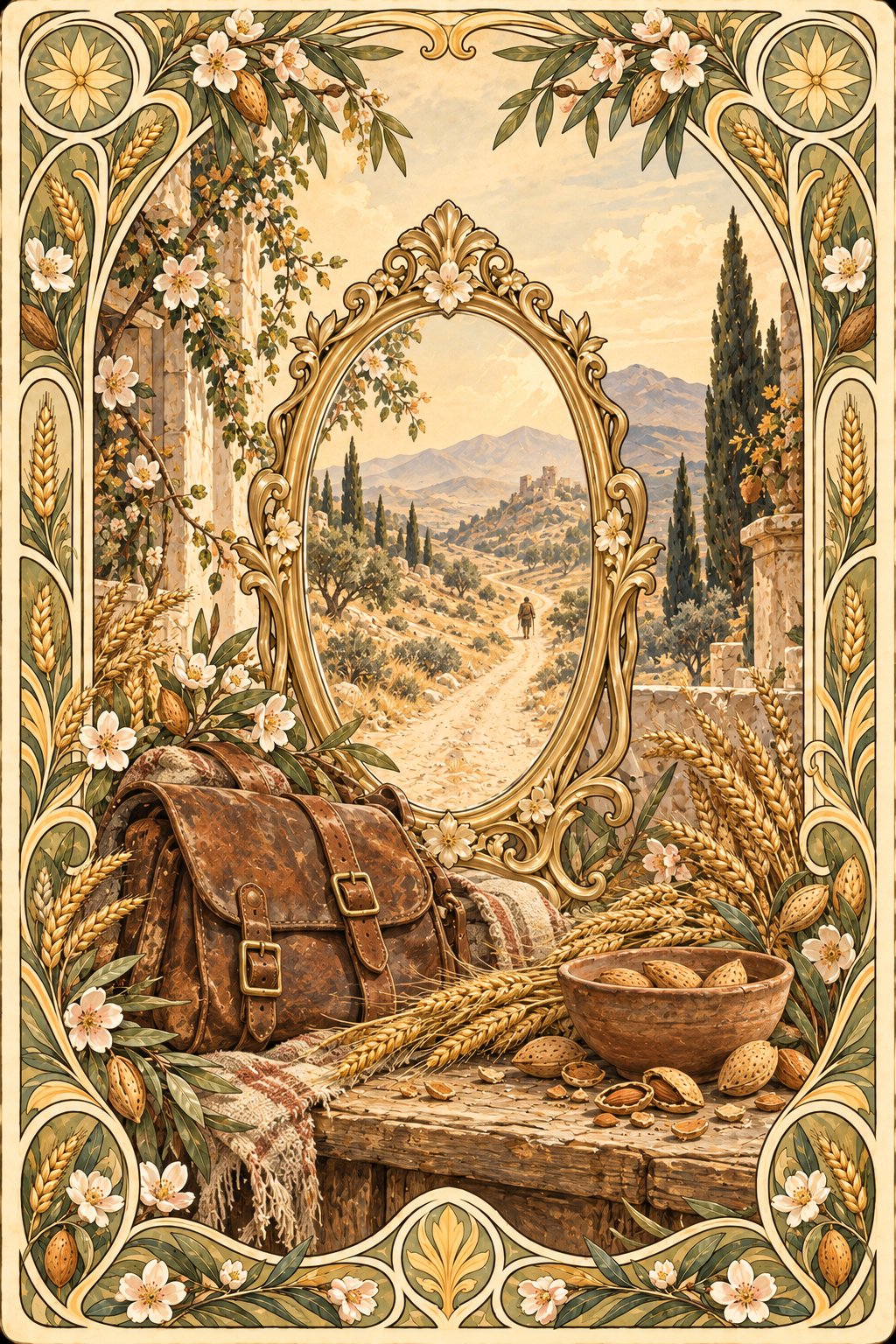
When sunlight is too direct, the image of a journey becomes stark, every shadow erased. The road stretches out, pale dust catching on the hems of old walking shoes, making the world feel flat and brittle. In the oldest stories, the sun at its zenith was not only the bringer of light, but also the maker of droughts and confusion, stripping detail from the landscape and parching the tongue. With every step, the earth gives off a faint powder, dry as the inside of a forgotten almond shell. The cloth of your shirt stiffens, salt leached from your skin, and the horizon shimmers as if it was a mirage spun from flour.
Long ago, travelers across the steppe would look for signs of relief―a cluster of almond trees, their fruit husks split and pale after the hot wind had passed through. Those who worked in kitchens knew the same transformation: almonds plunged for a breath into boiling water, their skins slipping away, leaving them bare and smooth, almost shining in the light that flooded the stone countertop. The process is quick, but the result is lasting: the nut, once rough and shadowed, becomes a single tone, stripped of its veils. In such a state, it is ready for the careful hand of a confectioner, or for the slow grind into grainy paste, destined to fill pastries in regions where the air is always dry.
There is a myth from the high plateau, where the sun is relentless, about a woman who covered the windows with linen to cut the fierce glare. The cloth, after many seasons, took on the color of almond flesh, thinned and blanched by day after day of heat. The window sills grew the same patina, grains of dust settling into the wood, leaving behind the map of many summers. There is a sense of time slowed and weathered in those surfaces—each object storing the memory of long afternoons when the air barely moves, and the only sound is the crackle of nutshells beneath your sandals. In such a room, the absence of strong shade is almost a presence in itself: a kind of emptiness that waits to be filled.
In the southern countries, when the fields offer nothing but glare, farmers remember the almond groves as a promise of renewal. Shells left behind after the harvest catch in doorways, swept together with straw, proof that something nourishing survives the season’s harshness. Nearby, the baker’s table is dusted with fine ground meal, ready to be folded into dough. At the market, sacks of peeled almonds are weighed beside bolts of unbleached linen. Everything here—tree, seed, fabric, flour—speaks to the transformation that comes from enduring exposure, a stripping away of all but the essential. The sun, too strong, leaves only the plainest trace.
Today, you might grind a handful of nuts in a mortar, feeling the texture change under your palm. You could bake a loaf of bread and dust the surface with ground meal, watching the crust turn crisp and delicate. Consider sitting at a window with a length of plain woven cloth to soften the light, letting the afternoon pass in quiet observation. Or, as evening falls, gather the shells from your table and scatter them in your garden, returning what endures to the earth.
Today's lucky color is BlanchedAlmond.
Lucky Color: BlanchedAlmond — #FFEBCDThe quiet trace left when all is pared away. For clarity found in simplicity.