The figure of the child, once radiant atop the horse, now squints beneath the glare, its shadow erased by the relentless press of noon. Petals of sunflowers shrivel against the wall, their faces unable to turn away. Even the long road, usually so welcoming, seems to flatten and bleach beneath the relentless heat, its edges blurring into dust. In this light, every detail is revealed and at the same time, every depth smoothed over—footprints left behind are quickly erased by the wind, and the horizon itself disappears in a shimmer.
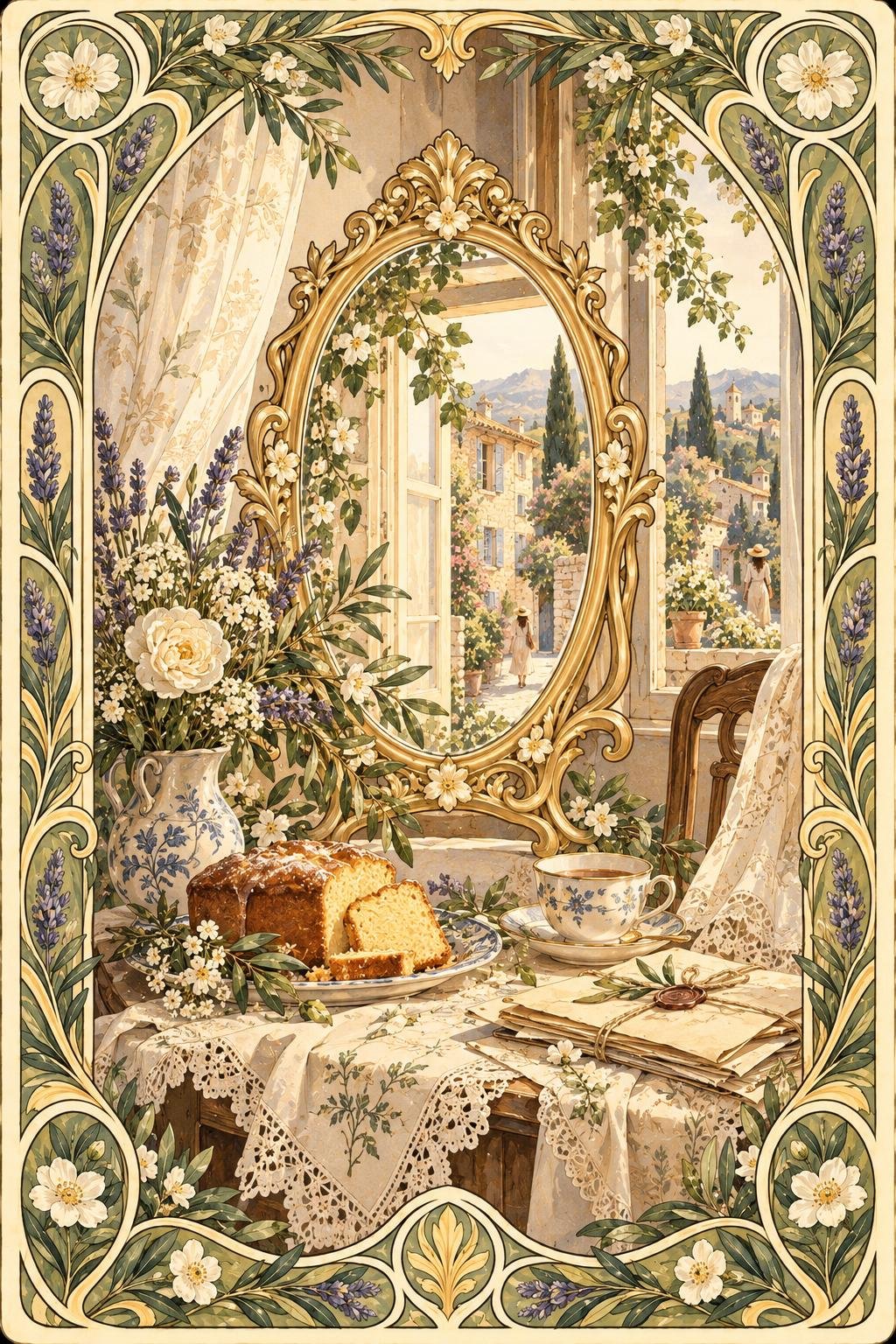
This is a land where the cloth on the table, once intricate with filigree, now lies forgotten, brittle as parchment. It is not new fabric, but something kept folded in the bottom drawer of a grandmother’s wooden chest: a remnant from a wedding, a baptism, or some other family story. Once, careful hands embroidered the pattern, knotting secrets into every loop and scallop, meant to last through generations of Sunday dinners and summer feasts. Now, exposed for too long to the sun, it grows fragile, the threads holding on but threatened by each gust that enters the window. There is beauty in its endurance, yet also the ache of knowing it was not meant for such harshness.
The dryness creeps everywhere. In the kitchen, the bread cracks as it is sliced, scattering crumbs across the faded cover. Even the old porcelain tea set, which once gleamed under the morning sun, seems parched, its glaze dulled by the relentless air. Every object in the house takes on the same worn patina: the lace handkerchief in the drawer, the heirloom table runner, the curtains pulled tight against the light. Outside, the garden path is lined by pale stones, softened by time, leading to a weathered bench where no one sits until dusk. The soil has turned to powder, too dry for footprints to last.
Travelers passing through this place wipe their brows and pause to knock the dust out of their shoes. They remember stories of old towns on the edge of the steppe, where tailors and weavers once gathered, trading secrets and verses while the air shimmered outside. In those days, lace was made by hand in narrow workshops, the air filled with the scent of soap and starch, and voices echoed in the alleys. Now, only fragments remain—scraps of craft, tucked away and saved from the light.
Yet there are ways to find solace in this landscape. Today, one might take down an old piece of lace from the cupboard and soak it gently in a bowl of cool water, letting the knots loosen and the patterns reappear. A walk in the late afternoon, when the dust settles and the sun slips behind the wall, can restore the sense of depth and distance lost at noon. Writing a letter on thick, textured paper, folded carefully and tied with a frayed ribbon, can recall the quiet of shaded rooms and the comfort of things made by hand. And when the heat lingers, brewing a cup of chamomile and sitting beside the open window can offer a moment to remember the stories behind every object, and the hands that shaped them.
Today's lucky color is OldLace.
Lucky Color: OldLace — #FDF5E6Let old things breathe again, and shelter your quiet persistence from the strongest glare.