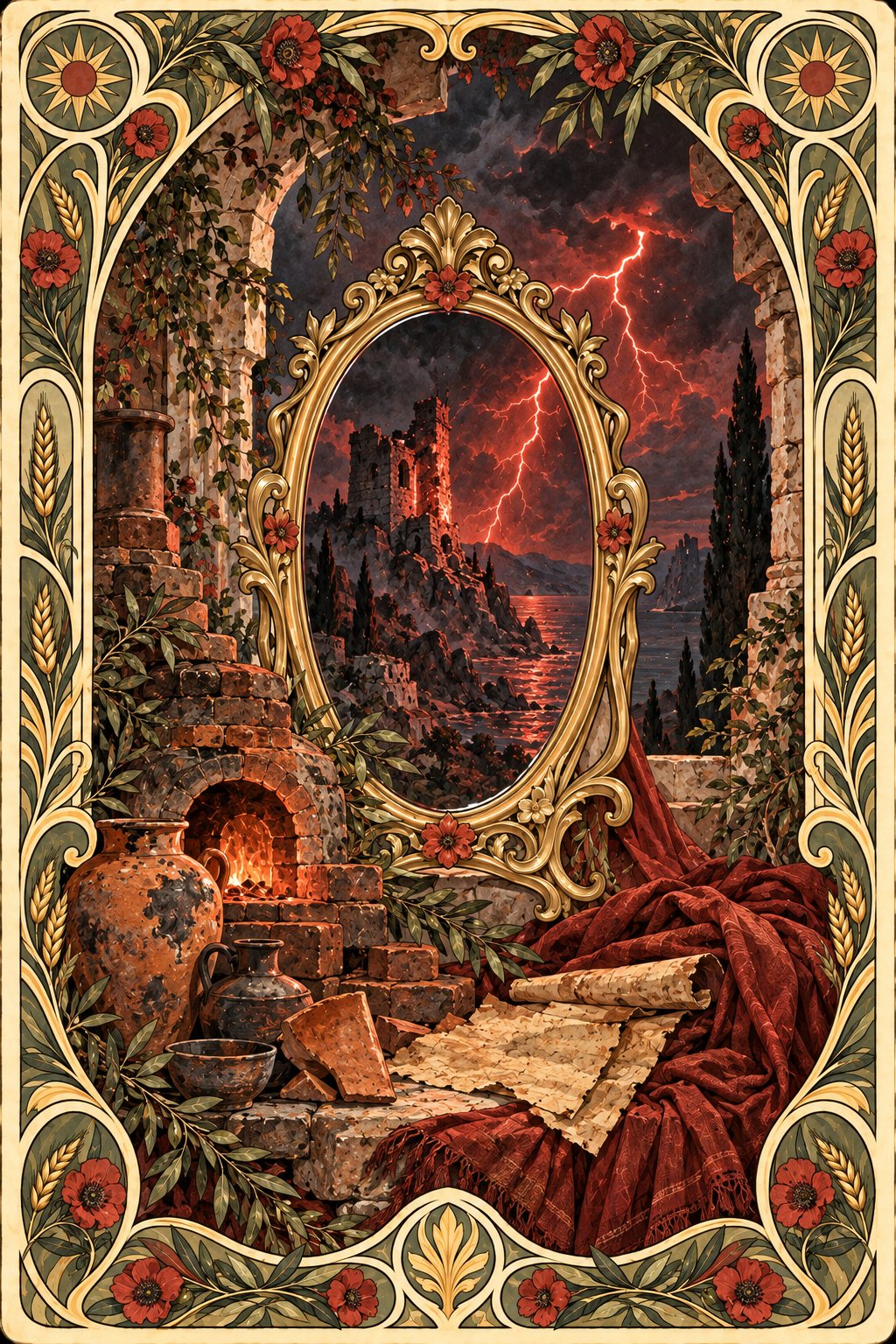
Lightning divides the night. The tower’s stone splits, and the iron crown tumbles, followed by a shower of sharp fragments. What was built and sealed away for years is forced into daylight by a single, absolute strike. The once-impervious walls now stand open to the weather, their bones exposed. In the air, the bitter scent of earth and dust rises, and the ground is scattered with the wreckage of shattered tiles and broken clay.
To stand at the base, you feel the weight of history. Towers across continents have fallen before: a bell-house struck in a storm, its stacked blocks tumbling onto the village square; a city’s old oven, centuries ago, cracking under siege and hunger, its fired bricks loosening in the heat. These blocks endure fire, flood, and frost, forged first in the kiln’s core. The kiln’s glow is fierce—its belly fed with timber and coal, the roar so loud it drowns the world. Here, earth is burned into lasting form. In old streets, these hunks of hardened clay built arches, hearths, and walls, making warm places in cold lands.
In the quiet of a ruined tower, you might find a chunk of such brick, jagged-edged but unbroken. It holds the memory of fire, of shaping, of the hand that stacked it and the flame that sealed its form. There is no softness: only what survives a trial. Ancient masons once wore aprons crusted with dust, their sleeves scorched, their hands calloused from feeding and drawing from the kiln. They spoke in low voices of the day’s work, of the risk in firing, of the way a block could shatter if the heat was wrong or a storm came too soon.
Sometimes, after the tower falls, rain pours through the roofless shell. Water seeps between debris, carrying the scent of scorched ground. In the fields beyond, orchards stand under clouds that threaten thunder. The smell of smoke drifts from a distant chimney—someone tending a hearth made from salvaged brick, warming a pot of stew against the chill. Even in collapse, the fragments find new purpose. A garden wall, patched from the rubble, surrounds rows of beans and bitter greens. The old blocks are rough under the palm, but they keep out wind and mark the edge of home.
On days when the storm has passed, the sharp sound of a trowel against brick echoes down alleyways. Children leap from one broken block to another, inventing games among ruins. The work of rebuilding begins with hands and mortar: stacking, pressing, making level. In the kitchen, bread bakes on a stone from the fallen tower, its crust scored and crisped by the same heat that once fired the wall. People gather on low benches, sharing stories in voices soft as ash.
If you find yourself in the shadow of collapse, you can walk to the nearest old chimney and feel the rough surfaces that once held up a roof. You can gather broken bricks from the garden and stack them into a border for new growth. You can set a loaf to rise beside the stove, letting the memory of heat and stone strengthen its form. You can sweep scattered fragments into a small pile, keeping them as a reminder of what stands after the storm.
Today's lucky color is FireBrick.
Lucky Color: FireBrick — #B22222Begin with what endures, and build again.