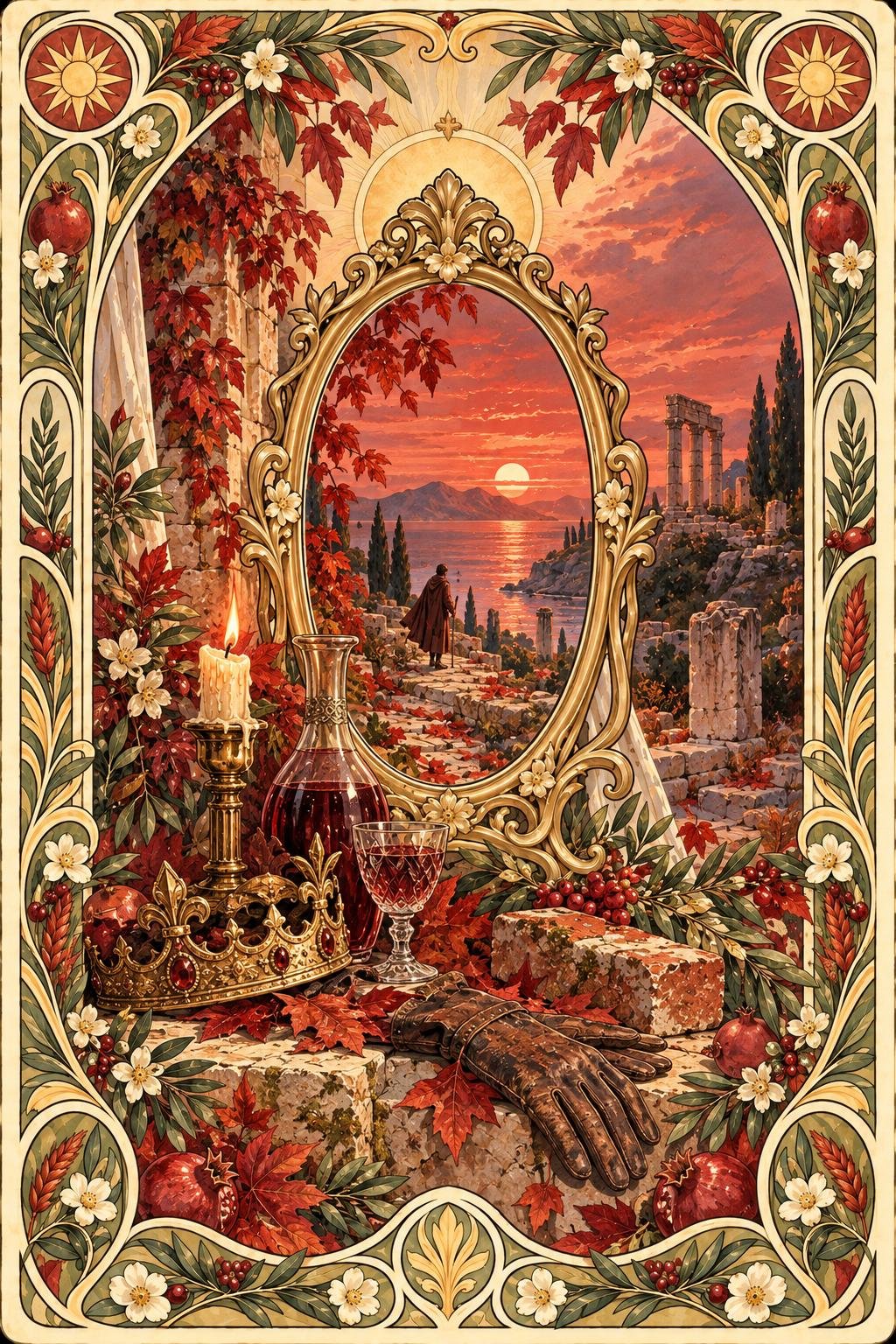
In the quiet, airless chamber at the end of the hallway, the old crown waits in a trembling, human hand. The card’s skeleton lingers, refusing to leave the dim scene, its scythe uncertain, the hour not yet struck. Night endures, for the window is narrow, and the certainty of morning has not yet spilled over the distant hills. The crown’s points, dulled by countless touches, recall the embers of a hearth long past its prime, yet someone still sits close, coaxing warmth from ashes that will not catch. The world outside is moving toward dawn, but inside, the weight of ending is denied, and the old order clings to stubborn pride.
The hearth itself is built of blocks risen from the depths of the earth, shaped by patient hands and fired in ancient kilns. These bricks, once part of a riverbank or a clay pit, have been stacked with care, binding together stories of labor, of shelter, of the daily bread warmed in their embrace. Generations have gathered near them for comfort, tracing weathered lines along their faces as storms rattled windows and children dreamed close by. Yet even the strongest kiln brick cracks over years, its edges chipped by heavy boots, or the slow creep of ivy seeking a foothold. Still, some refuse to replace them, patching instead with mortar, filling fissures that widen each season, unwilling to accept that a new hearth might be needed.
Myth and memory entwine in these walls. In an old city, the masons who built the cathedral knew their work was both endurance and impermanence; they pressed their mark into the soft clay before baking, so that centuries later, when the bell tower faltered, their names might rise again in the dust. Deep in the countryside, a forge glows behind the smith’s cottage, where tongs and hammers are laid along a ledge of the same clay-fired stone. The smith reworks rusted iron, turning sabers back into ploughshares and horseshoes, the ringing echo of insistence: not yet, not yet, the work continues. In another time, a ruined kiln stands alone amid the heather, its bricks now home to moss and the nests of small birds, a monument to all the endings denied, and all that grows regardless.
Winter weather presses in. The wind finds the gaps in the old walls, and the damp creeps up from the river, but inside the household, the fire is built again each dawn, no matter how much smoke returns through the cracked chimney. Someone lifts the kettle, places it on the bricks, and waits for the first hint of steam. Old jars of preserved fruit line the mantel, sealed years ago, their labels faded but their contents still sweet. Today, the refusal to let go becomes an act of daily devotion: sweeping the hearth clear of last night’s ash, turning the slow-cooked stew so it does not burn, mending a cloak with careful stitches, placing another log on the fire even as the season turns. These are gestures of hope and defiance, holding fast to what is familiar, even as the world outside insists on change.
A person may press their palm to the oldest brick in their home, feeling the memory of sun and clay, or turn to repair a household tool handed down through generations. They might sit beside a forge or a kiln—if only in imagination—and recall all that was shaped and re-shaped there. Or they may tend the hearth, however humble, by cleaning it and preparing a simple meal to be shared, honoring the warmth that still lingers.
Today's lucky color is FireBrick.
Lucky Color: FireBrick — #B22222Let your hands remember what they have built.
Some endings wait; some embers endure.