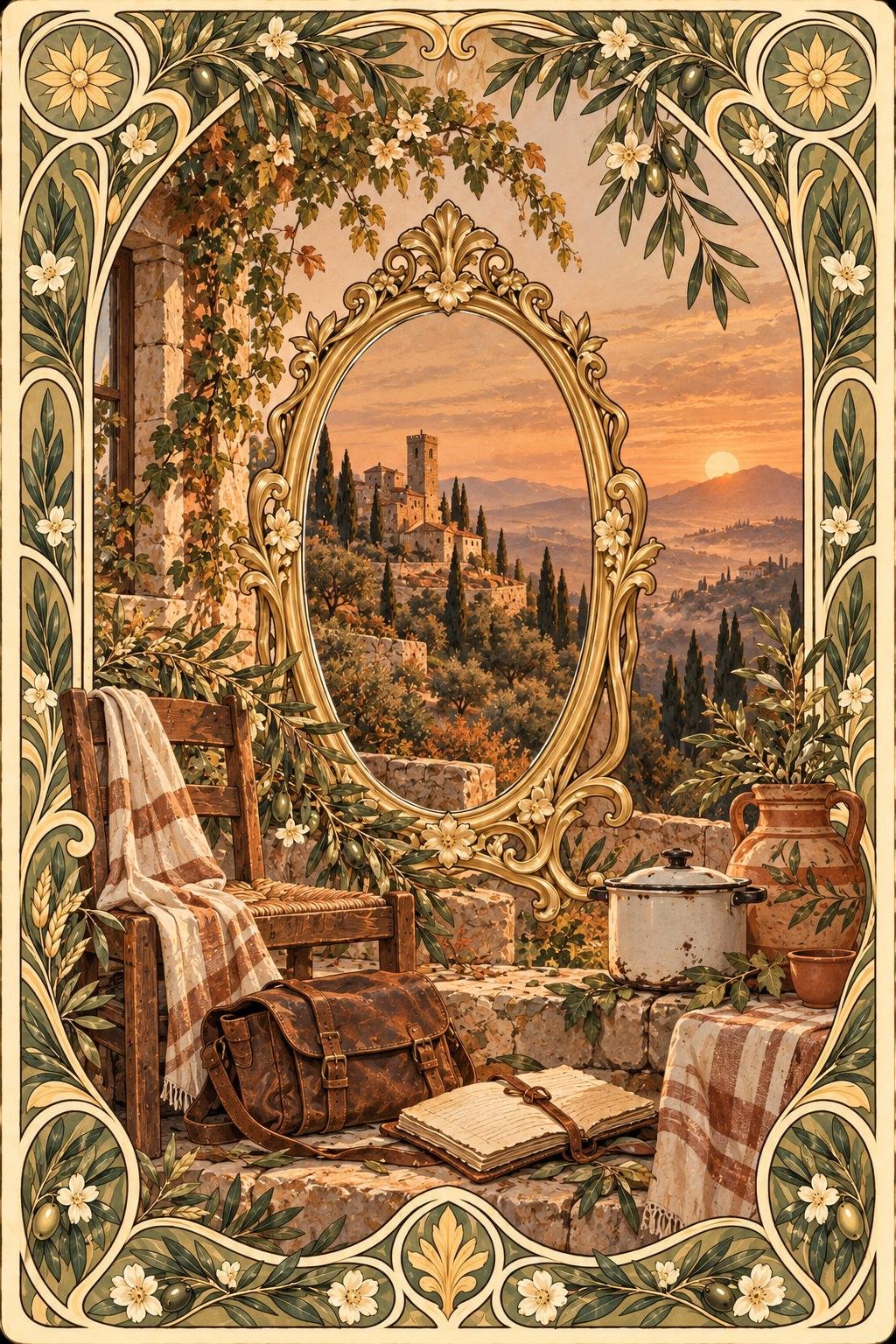
A figure sits in a cold room, holding in their palm an object that once gleamed with authority: a brittle crown, old as the bones of kings, its surface worn and pitted from years unseen. Dust motes circle above. The curtains are drawn tight against a new dawn, though the faintest promise of day pries at the edges. The world outside waits for the moment when someone will open the window, but the hand inside refuses to release the crown, the doorway between past and future clogged by memory and hesitation.
Long ago, in the hills above an ancient city, laborers would kneel in the wet soil and extract something prized from the earth: a clay, dense and heavy in their palms, prized by artists and tile-makers across continents. From the riverbank, they hauled it in baskets; from dark cellars, artisans ground it down, mixing the granules with oil in wooden bowls. With this, they painted saints, devils, and empty fields onto plaster and canvas. In the workshop’s hush, the scent of earth lingered, and the grain of the clay marked every brushstroke—a pigment that remembered fire and flood, empire and exile.
There is a myth from the old city: a maiden who, upon refusing the advances of a jealous noble, was transformed by the gods into a silent hillside. In spring, wild grasses cover her, but when rain comes and the ground is churned by hooves and boots, the hillside’s flesh is revealed again—rich, deep, impossible to ignore. Farmers, not knowing the tale, cut the sod and fetch bricks from below, using their tools to build hearths and ovens, their lives shaped by what the earth yields and what it withholds. The city’s rain-washed streets recall this story, the bricks laid in patterns that spiral and break, echoing the crown still gripped in a stubborn hand.
A trader’s ledger, unearthed from an abbey’s library, lists routes traced between distant ports and the city’s market, recording the passage of this pigment in exchange for salt, wine, and linen. Sometimes, the mud would arrive still damp, wrapped in waxed cloth. Sometimes, it was ground and stored in sealed jars, ready to be reborn in the hands of a mason or a portraitist. The ledger’s ink is faded, but the weight of commerce lingers—proof of a trade that would not let go, even as new roads and rulers came and went. In the city’s kitchens, bread bakes in old clay ovens, their surfaces scorched from centuries of use, the heat and patience of untold hands imparting a flavor that cannot be found elsewhere.
To keep the old from curdling into decay, a person might knead bread dough by hand, feeling the stubbornness of flour and water yield to warmth. They might walk, rain or shine, to a hillside and trace the paths where wild grasses grow thin, where earth shows through. In the workshop, preparing surfaces for a new painting, someone might grind a handful of soil, remembering that each layer is an end and a beginning. Or, in the quiet before sunrise, they might pause at the window, fingers still curled around an old keepsake, and ask themselves what it would mean to let the dawn in.
Today's lucky color is Sienna.
Lucky Color: Sienna — #A0522DHold earth, let go, or shape it anew.