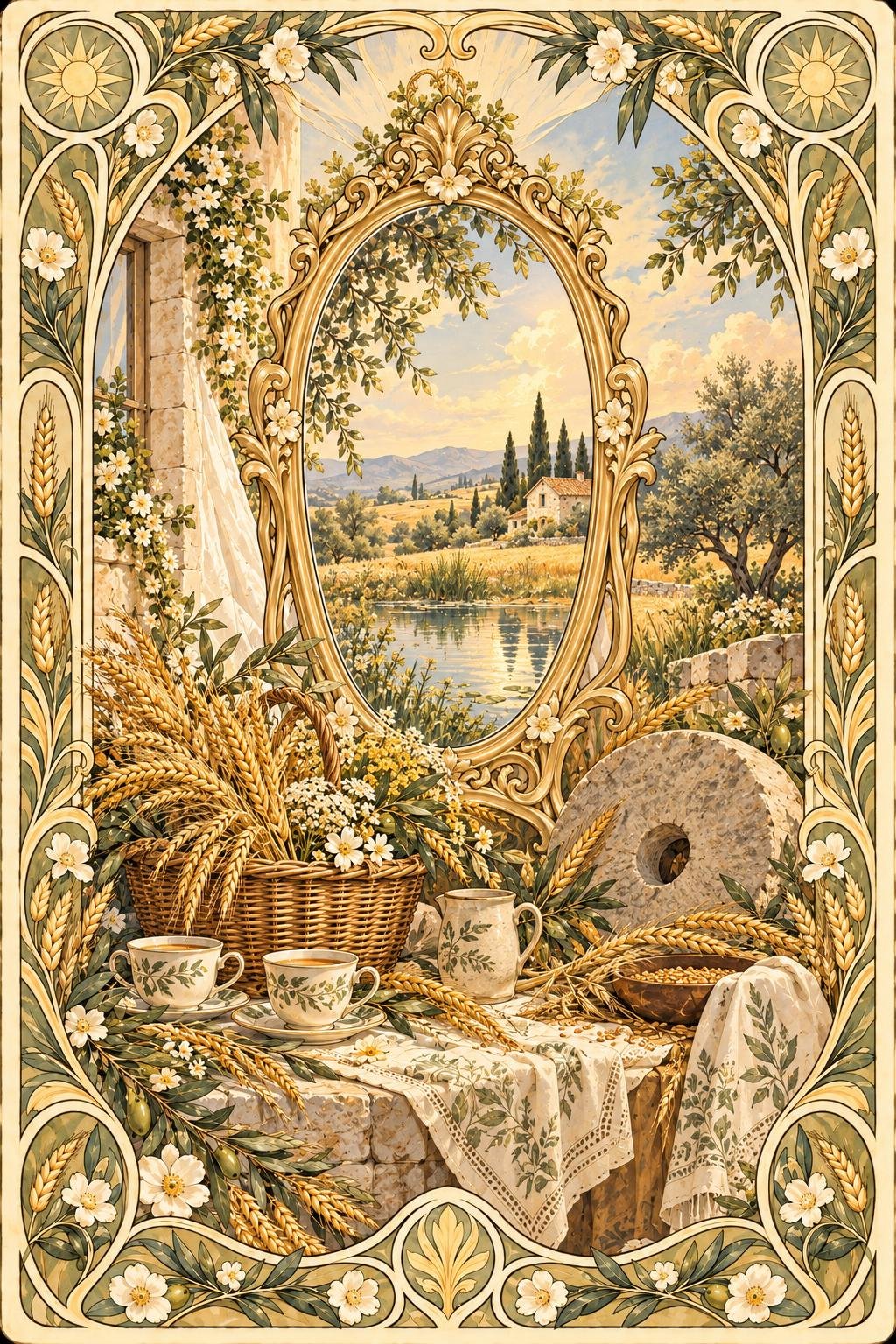
A figure stands quietly, pouring water from one cup to another, the stream unbroken, the movement steady. Beneath their feet, a shallow pool reflects a sky that has not yet decided its mood. In the distance, a narrow path leads toward the ridge where light promises resolution. Mixing is the work, not the end in itself, but the path by which disparate things find harmony together.
The story of this path is written across vast stretches of earth, where the wind moves through fields in slow, rolling tides. Here, stalks rise up from furrowed ground, heads heavy with seed that will become both bread and ritual. The plant is at once the heart of the landscape and its history, sown and reaped by hands that have learned the patient rhythm of seasons. Rain falls, sometimes too much, sometimes too little, and always it is measured, balanced, weighed, poured carefully from one year into the next.
In ancient myth, these fields belonged to gods who watched over the cycles of planting and harvest. The grain offered up on stone altars marked a pact—what is taken from the earth is returned, after transformation, to sustain life. In distant villages, children gather the fallen heads after the reapers pass, weaving them into small plaits to hang above the door for luck and plenty. Each stalk, cut and stacked, is a measure of time, a testament to the quiet work of blending effort and faith.
On the kitchen table, the mill’s work becomes flour, and flour becomes daily bread. The hands that knead it remember the hands before them, shaping dough in the early morning quiet. There is a cup of water, the right pinch of salt, a touch of honey, and the waiting for yeast to rise. The loaf that emerges from the oven holds both the memory of the field and the promise of the meal, a bridge between hunger and fulfillment, between the work of the earth and the work of the hands. Cloth woven from the same plant covers the table, sturdy and plain, holding the marks of many washes and many meals.
Trade winds once carried ships heavy with sacks from distant provinces, the grain inside destined for city bakeries and market stalls. Bargains were struck in counting-houses, and fortunes rose and fell on a single harvest. The weight of these ships, the steady churning of their passage, is another kind of blending—rivers of commerce flowing to meet rivers of labor. There are records of ancient droughts and generous seasons, of storehouses filled and emptied, each line a reminder that balance is never fixed, but always maintained.
Even the weather takes its cue from these fields. In late summer, the air is still and heated, carrying the faint scent of earth. At dusk, the light is long, the horizon softened by dust that floats up where the threshers have passed. In such weather, the world seems to pause, holding its breath between gathering and giving.
It is possible, today, to step into this movement: bake a loaf, kneading the dough with patience; hang a small plait above your doorway, woven from any straw or stalk at hand; place a sheaf on your table, to remember the slow, deliberate work of the field; or take a quiet walk along a path through open land, feeling time pass between your hands as water between two cups.
Today's lucky color is Wheat.
Lucky Color: Wheat — #F5DEB3Balance is patient. What is blended endures.