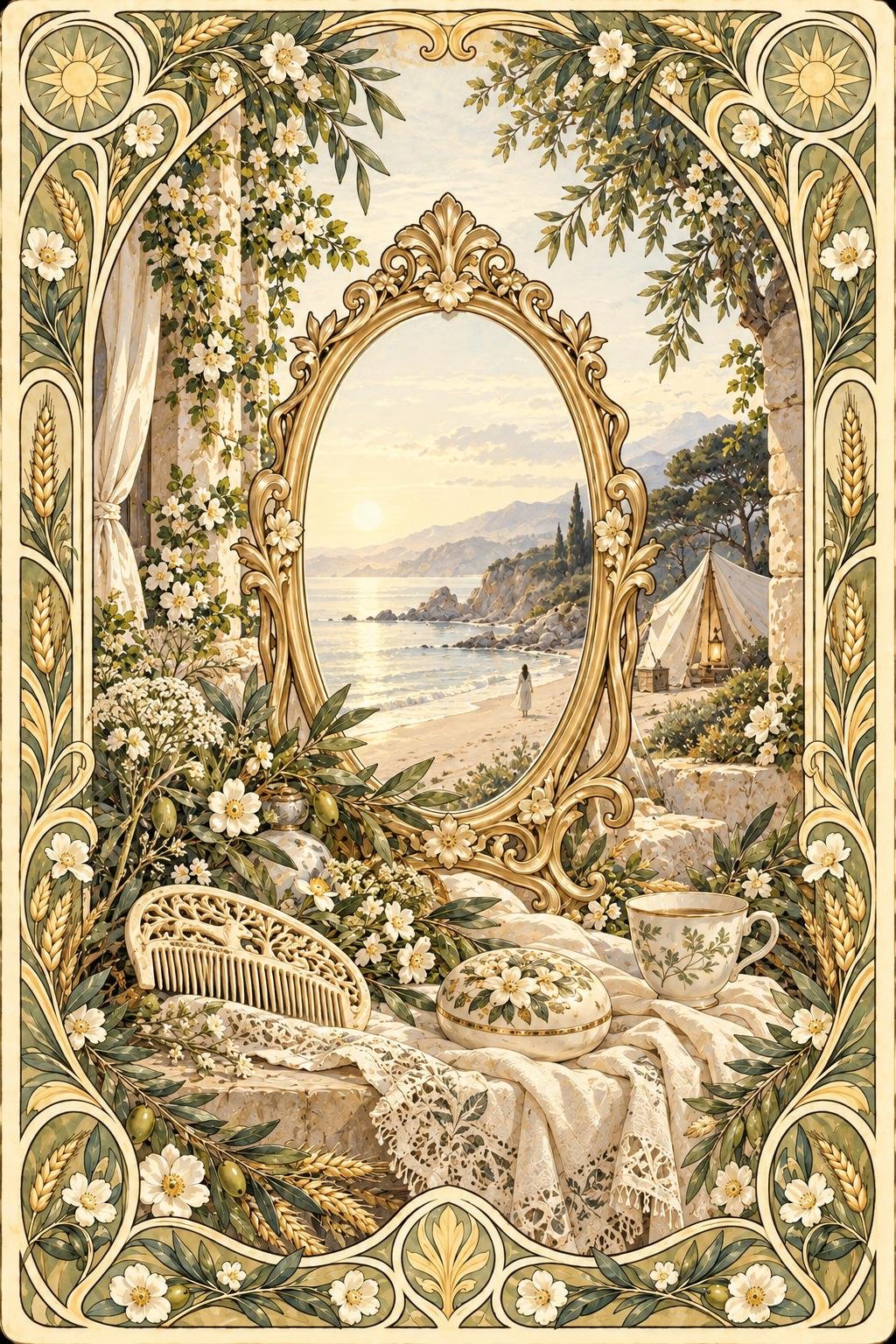
The chains in the Devil card are slack now. Where once they bound, now they hang—jewelry at the throat, bracelets for wrists once bruised. There is a hush in the stone vault, the air stale but undisturbed, as if the shapes that crouched in the shadows have retreated far beneath marble flagstones. In old stories, the gnawing thing is not always escaped, but sometimes simply ignored, made into a dull ornament. The mind makes a necklace of its old fetters and sits, unmoving, in the hush.
There are places in the world where ancient beasts become trophies: the tusks carved by careful hands, the smooth surface cool, heavy, worn down to a shine by centuries of ritual and trade. In West African kingdoms, the tusks told histories, incised with lines and tales, each twist and ripple a mark of kings and the silent, long-marched elephants. Palaces displayed them as a sign of conquest, not of the beast, but of one's own darker hunger, dressed up in parades and ceremonies. The trade routes wound through humid forests and slow rivers, past thunderheads gathering in the late afternoon, where air thickens and the world grows quiet before rain. Wealth rode on the backs of porters, glinting with the promise of distant fortunes, yet every mark held a memory of the living thing lost.
Somewhere, the church's reliquary glimmers in a shaft of light, a vessel for a saint's tooth, a sliver of a martyr's rib. The altar is lined with keys and locks, and in the hush, incense curls upward, the scent clinging to embroidered cloths. The congregation sits in a half-silence, the past's burdens present but unexamined, as if the sacred relics could absolve them of all that they carry. The keys dangle from hooks, unused, the doors left ajar. Nothing here is fastened tight.
The weather outside is gentle, persistent—spring's soft fog, rolling in from the river, wrapping the fields and the city in a cool, enveloping mist. The world is blurred, the hard edges softened. People move in silence, the hush of their footsteps echoing against stone, as if not to disturb the slumbering memories within the relics and carved caskets. In kitchens, hands reach for the pestle resting in a dish—smooth, dense, marked by years of use—grinding root and husk for the morning's meal. Cups and bowls made from the same substance line the shelves, heirlooms passed through generations, familiar as the weight at the end of a chain that nobody has quite wanted to remove.
Yet the chain is loose. The heavy thing at its end could be set aside, if only for a moment. A person can pause with the pestle in their palm and notice how easily it could be put down. They can walk through the fog and let it settle softly on their skin, reminding them that boundaries shift, and that the old reliquaries do not need constant tending. They can run their fingers along the carvings in a keepsake and remember that stories are shaped by the hand that holds them, not just by the shadow that falls behind. They might take a quiet hour to polish the objects on the shelf, not because they are sacred, but because care can be gentle, not binding.
Today's lucky color is Ivory.
Lucky Color: Ivory — #FFFFF0The chain may already have slipped from your wrist.
Step softly; the shadow no longer grips.