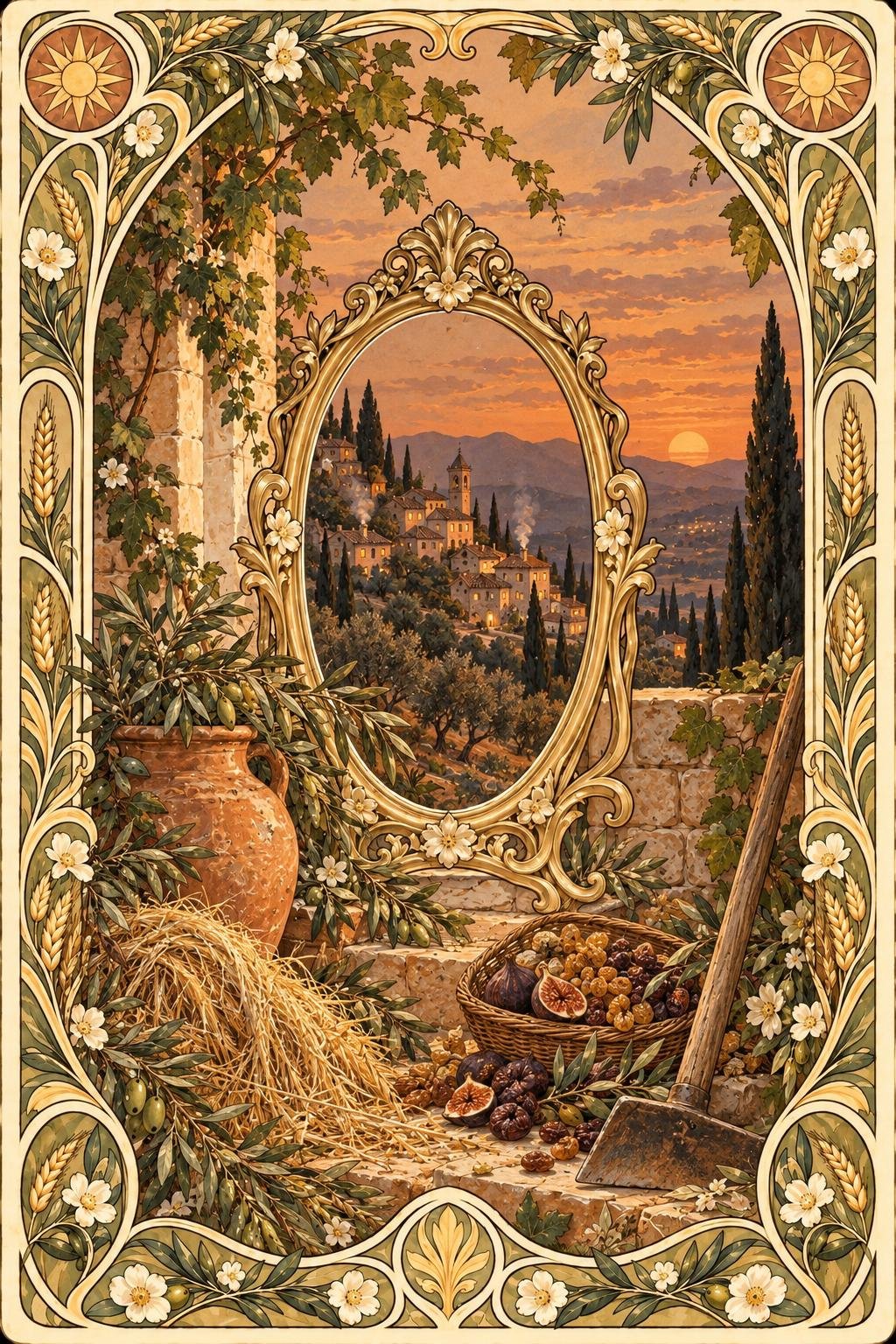
In the card’s upright form, the orchard brims with fruit, the wheat stands tall, and there is the sense of a gentle hand encouraging the wild to yield its gifts. Reversed, the garden is let go. Branches arch with the weight of untended fruit, compost accumulating beneath, until the air grows thick with the scent of autumn left too long. The stone jug, once filled with fresh water for the roots, now sits crusted and forgotten at the edge of the plot. Here, shelter is no longer gentle, but heavy—ivy climbs the cottage walls, pressing into the cracks, its hold as persistent as it is suffocating.
The earth darkens beneath the failing crops, and a path once swept clean by careful hands now disappears beneath a litter of leaves and dried grasses. The promise of a generous harvest is broken; the fields are marked by the deep furrows where the plow once passed, now hardening in the sun. From the kitchen window, one sees the edges of the world flecked with the dust of old brick and the dry mortar that holds a hillside town together. The old town of the river valley—famed for its workshops—once carried color ground from local soil, packed in earthen pots, and pressed into the hands of painters and builders alike. Each wall, each canvas, bore the mark of a place rendered in the material of its own ground, centuries before synthetic imitations.
In the home, a faded apron hangs on a peg, the fabric soft and sturdy from years spent in the kitchen among loaves and simmering pots. Once, it was new, its fibers woven to withstand both fire and stain, ready to meet the harvest head-on. Now, it waits for hands that are busy elsewhere. The table, meant for abundance, gathers dust; bread crumbs linger from last season’s meal, ground into the wood by elbows resting in exhaustion.
The sky above the countryside shifts with a slow, pressing heat. A late summer storm rumbles on the horizon, the kind that brings not relief but a sullen promise of more weight to come. The air carries the memory of rain only just fallen, mixed with the scent of earth turned up by hooves or by the labor of hands now stilled. From the hills above the river, the old trade paths once led down to the piazzas where merchants traded pigments, raw and ground, for spices and cloth. The pigment makers, their hands stained in the work, knew the value of earth transformed: what was plain became enduring, what was dust became legacy.
Today, a person can sweep the dust from the threshold, clear a patch of earth for late planting, or mend the seam of a worn apron with quiet diligence. They might prepare a meal from what is left in the larder, honoring the slow yield. By tending one thing—be it earth, tool, or craft—heaviness may become a kind of shelter again.
Today's lucky color is Sienna.
Lucky Color: Sienna — #A0522DEven when the field is fallow, the ground waits.
The old earth holds its stories.