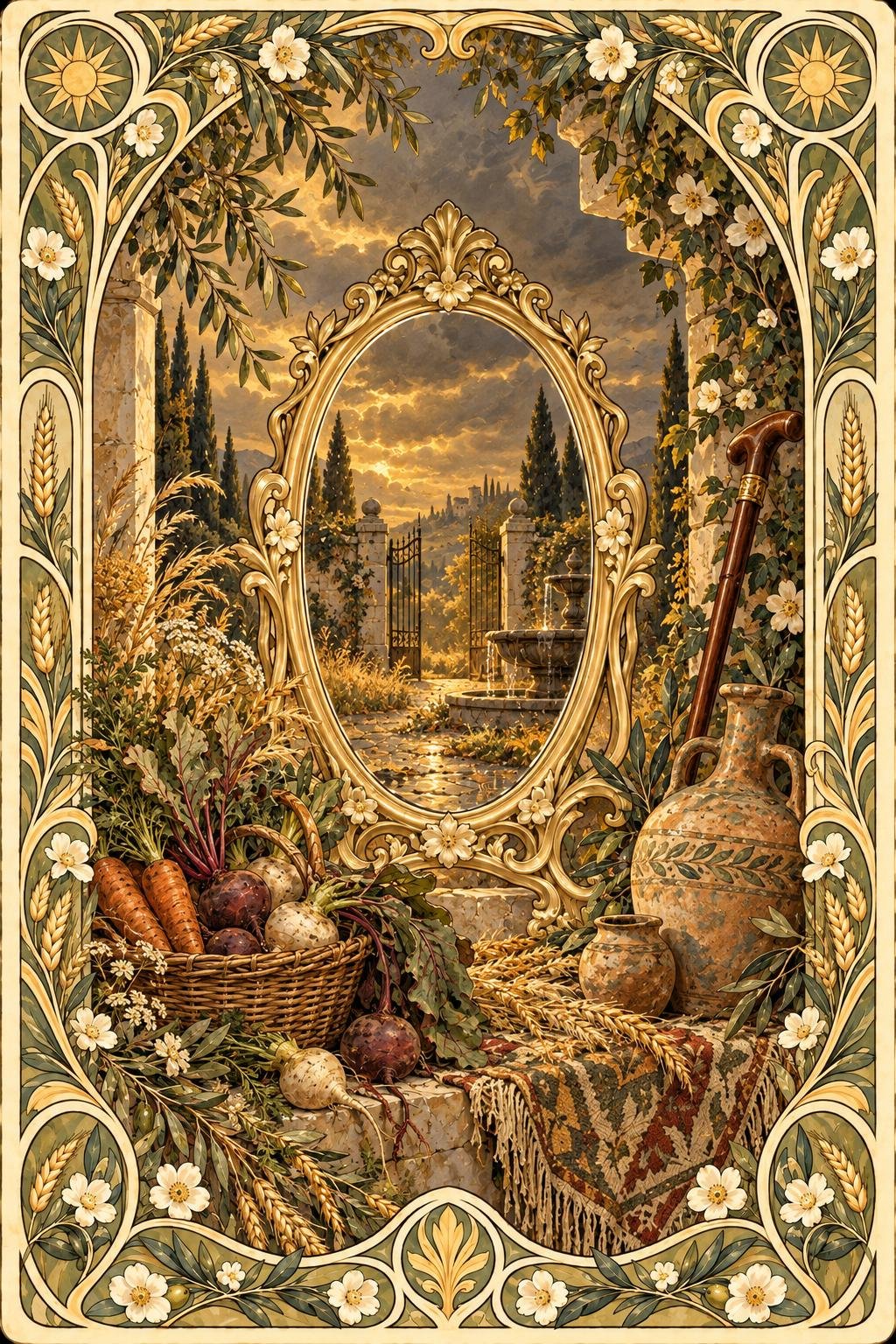
The orchard at the edge of the field stands as the Empress once did, arms outstretched, but now her robe is tattered with last year’s stems. Once, apples bowed the branches, and the ground was littered with the soft hush of fallen fruit. Now, a hedge of canes and tangled weeds rises in their place. Thistles pierce the moss, claiming wild corners where hands have left off their tending. The garden fence sags; late autumn wind pushes at it, whistling along rails once sturdy, now indifferent to holding anything in or out. The harvest never gathered, seeds that might have fed a household spent themselves in soil, unseen.
All along the old wagon road, the tough stalks of an unremarkable weed cluster like sentries. Their plumes once brushed the hems of travelers’ coats, leaving a dust that sticks to heavy boots. These rods, sturdy as shepherd’s crooks, have stood through rain and drought. Their crowns once topped with little torches, a sign to wandering bees, now droop with the weight of the season’s neglect. In past times, healers and foragers sought them, their sap and tea drawn for aches and fevers, their presence a simple boon. Today, their stems dry in the wind, rattling against each other with the voice of a broom left outside all winter.
The cottage behind the orchard is cool, the hearth swept out, the baskets empty. A coat, the color of dusted wheat and old cornmeal, hangs by the door. Once, it was worn by a woman walking through dew-damp grass, collecting roots at sunrise. Its rough weave, marked with years of use, signals work left unfinished. In the pantry, honey jars stand forgotten, their covers sealed tight but contents slow to crystallize. The larder, lined with sacks from the mill, holds only scraps; nothing comes in from the fields these months, and the last potatoes sit in a cracked bowl.
Far beyond the fields, on the great plains, settlers once marked the end of summer by the bristle of roadside weeds. Horses shied away from their dense patches. Children, home from chores, would pluck their straight stalks to fashion makeshift arrows or garden markers, sometimes weaving them into wreaths to hang above the door as a plea for better fortune next harvest. In the wild, where storms gather at the horizon, these plants bend but do not break. Their resilience, though unnoticed, has kept them rooted through generations of neglect.
Now, when the wind comes hard from the west, it carries a scent both earthy and faintly medicinal—an old field’s breath. The air is thick and quiet, heavy with the knowledge of what has not been harvested. Shelter, once a blessing, feels close and cool. Even so, a hand may reach for what still stands upright near the fence: a rod to sweep the hearth, a stem to stir the last of the soup, a sprig for the teapot. These are the simple acts—sweeping the doorstep, boiling a little tea from what remains, mending the coat’s rough sleeve, or setting a bundle of dried stalks on the mantle as a sign that not all has been lost.
Today's lucky color is DarkGoldenRod.
Lucky Color: DarkGoldenRod — #B8860BLet your hands take up what is left standing in the field. Even in neglect, something endures.