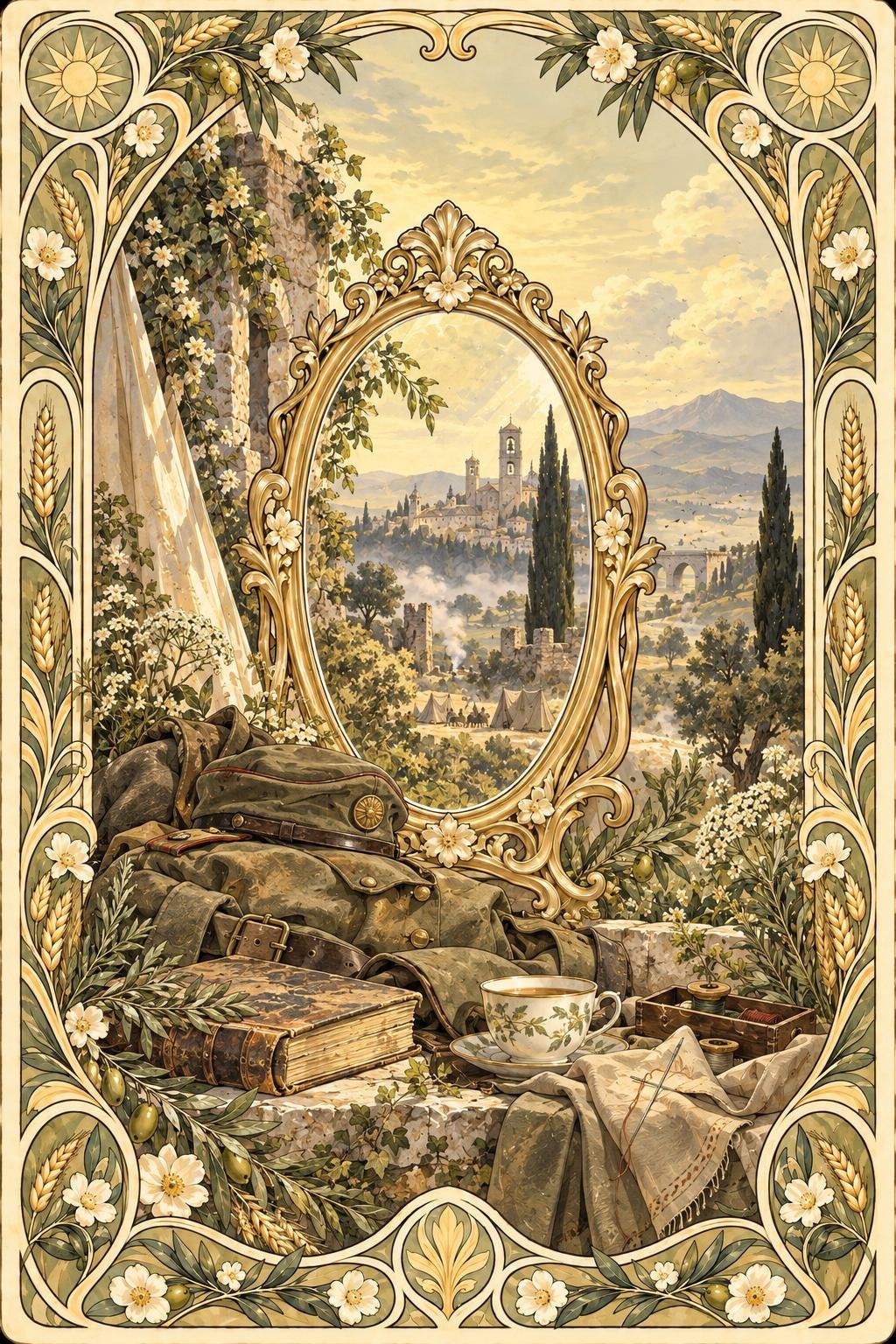
The Hierophant sits between pillars, presiding over the rites with crossed keys glinting in his hand. His throne, built of tradition, has borne the weight of centuries. Yet in the reversed card, the steady repetition begins to echo with hollowness. The words are spoken, the candles lit, but the meaning has slipped behind the tapestry. The robe hangs loose, the gesture is correct but empty. It is not heresy, but fatigue — a questioning of the old pattern.
Where there once was the thunder of a congregation, there is the hush of the parade ground at dawn. The dust rises in swirls around boots whose laces have been tied so many times that the fibers are soft and familiar. Soldiers stand in file, uniforms pressed, but their eyes wander, remembering not the drill but the earth beneath their feet. These uniforms, stitched from a fabric chosen not for celebration but for blending into wide plains and dry hills, belong to another story. They were invented for campaign, for the great colonial project, for the crossing of deserts and the waiting out of monsoon rains beneath makeshift tents. The word means "dust," and its first home was in the hands of tailors and quartermasters, not priests.
Once, in the shadow of the British Raj, rolls of this cloth were shipped in crates stamped with strange names, destined for outposts where the wind carried the scent of far-off seeds and the taste of tea gone cold in battered cups. The cloth was worn by men who learned to move differently, to read the silence of the land as much as the commander's orders. It became the color of adaptation, of moving between rules — not quite home, not quite foreign, an answer to no one's question except that of survival. The sacredness of ceremony faded beneath the necessity of function: quick stitches to mend a tear, water fetched in battered tin, a prayer whispered not in a chapel but under a sky too wide to be contained.
Elsewhere, the monsoon arrives, and the earth throws up a haze, thick and close. Crops bend, almost ready for harvest. Fields of millet and grass, their stalks tough and dry, move in the same rhythm as the breath of a sleeping house. On days like this, the air is full of waiting. Women hang laundry on lines strung between trees, garments that have known the dust of streets and the scratch of straw mats. Children gather seedpods, their palms smudged with the earth. The sun filters through woven blinds, dappling the floor where the old rug lies, threadbare but sturdy, holding the memory of long afternoons and the weight of stories told and retold.
A man polishes his boots at the threshold, the bristles of the brush lifting away the traces of yesterday’s road. Somewhere, rice simmers in a battered pot, and the aroma rises, plain but steadfast. In the market, sacks of grain are stacked, their skin a promise of sustenance, a kind of quiet abundance that does not ask ceremony. Here, meaning is made again from habit, from the folding of cloth, the mending of seams, the setting of table and bowl. These are the rites that remain when the old rituals lose their voice.
Today, you might wipe the dust from an old pair of shoes, mend a tear in a favorite shirt, or let your hands rest on the grain of a wooden spoon as you stir a simple meal. You could open a window to the warm, steady air and watch the laundry sway on the line.
Today's lucky color is Khaki.
Lucky Color: Khaki — #F0E68CWear something sturdy, or let the weather be your teacher.