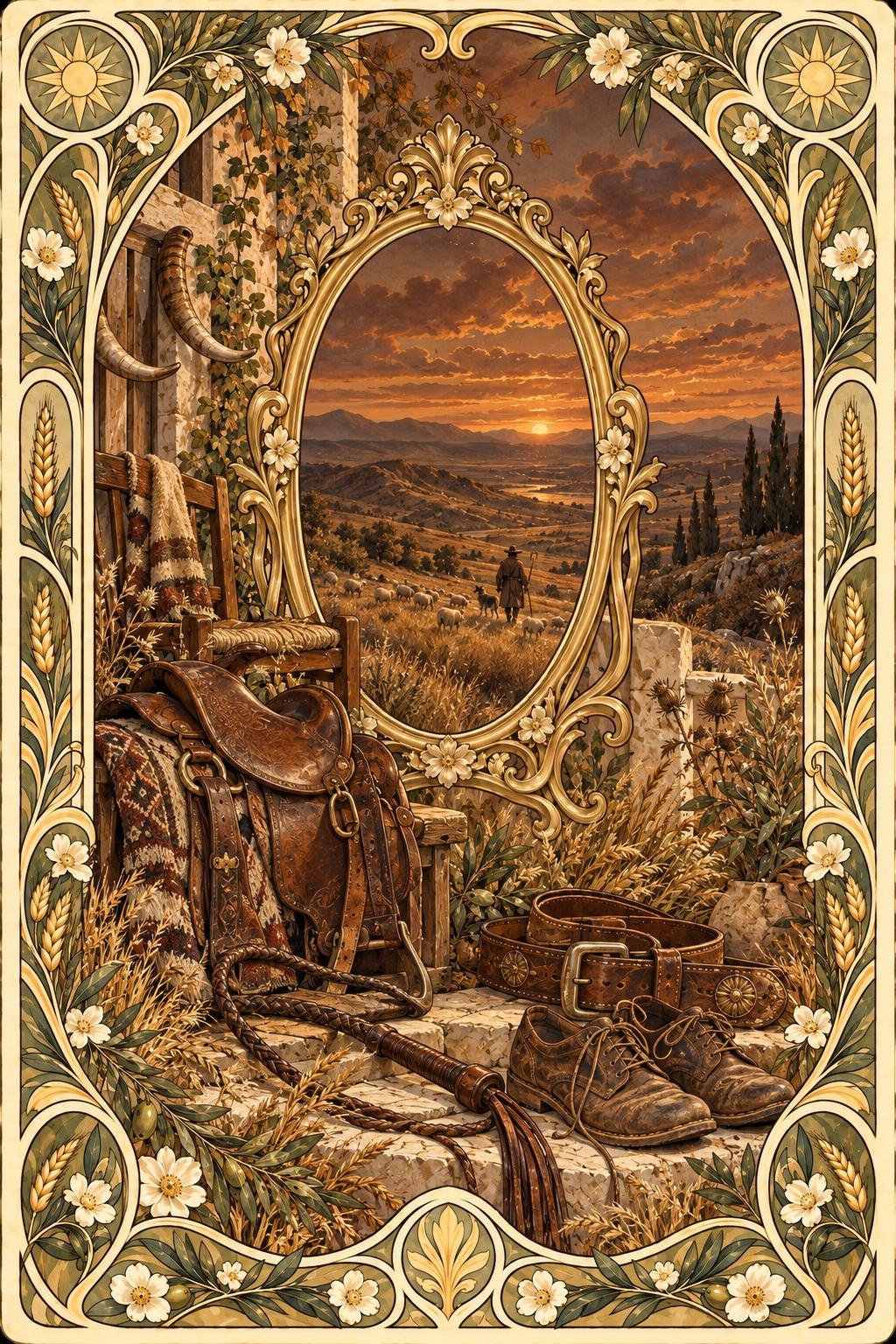
In the echo of the cloister, the Hierophant’s seat is empty. The gilded chair, carved with oxen and vines, stands untouched. Here, the incense rises, but no voice meets it; only the rhythm of ritual endures, hollowed out and repeated like a chant whose meaning has wandered far from its source. It is the habit that remains: bells, steps on the flagstones, the ceremonial staff leaning against the lectern, its handle worn by centuries of hands but now cold in the morning light.
The procession passes the old stable, where harnesses still hang and the saddle, shaped by the weight of absent riders, waits on its wooden frame. In another season, horses stood stamping at dawn, their breath twining with the prayers of monks. Now, the stable smells of leather and earth, and the stray hay underfoot is dry and sharp. The priest’s vestments, once embroidered with thread from distant lands, are locked in the cedar chest, safe from moths but untouched. The village tannery by the river, its vats dark and steaming with tannin and bark, still works as it always has, but few come to buy the cured hides. The trade’s secrets, passed from father to son, stay alive in gesture and routine—hands dipping, wringing, scraping skins smooth—but the meaning is fading, the story breaking from its tether.
In the kitchen of the old house, a wooden ladle stirs a pot of beans on the fire, its handle polished by the years. The long bench at the table is marked where generations have sat, pressing their elbows during winter evenings. Outside, the rains have turned the fields to mud, and the farmer’s boots squelch on the path, carrying the memory of horses and plows, but the work is different now—machines, not hands, till the soil. Even so, the shed holds its rows of old harnesses and bridles, oil-dark from decades of use, and the barn’s ladder is smooth where someone once sat to mend a broken strap.
The old trade routes—paths carved by hooves and carts—run quiet beneath the bare trees, marked at intervals by milestones, half-buried in weeds. The great western road once carried caravans laden with dried dates and salted fish, the spoils of distant harvests packed in waxed casks. Now, it is mostly used by shepherds guiding their flocks home at dusk, their coats flecked with the day’s dust. In the evening, a fire is coaxed to life in the hearth, and someone brings out the oiled boots, rubbing them with fat and a cloth until they are supple again.
On the hillside, the wind brings the scent of moss and old bark. The shepherd’s crook, made from a branch twisted and hardened by years in the woodshed, is passed from hand to hand as the flock is gathered. In the far field, mushrooms rise after rain—small rounds, pressed into the earth, reminders of wild harvests and foraged food. The ritual of collecting, preserving, and storing these gifts of soil continues, though no one remembers the old songs sung during the gathering.
Today, you can oil the strap of an old satchel, sit by the window and mend a torn glove, or rub the back of a wooden chair with beeswax until it shines. You might slice bread with the same knife your grandmother used, or sweep the porch with an old broom, repeating gestures learned long ago. These small acts, stripped of ceremony, carry the endurance of things shaped by hand and handed down.
Today's lucky color is SaddleBrown.
Lucky Color: SaddleBrown — #8B4513Let the day’s meaning return by tending to what remains in your hands.
Even hollow rites keep the memory alive.