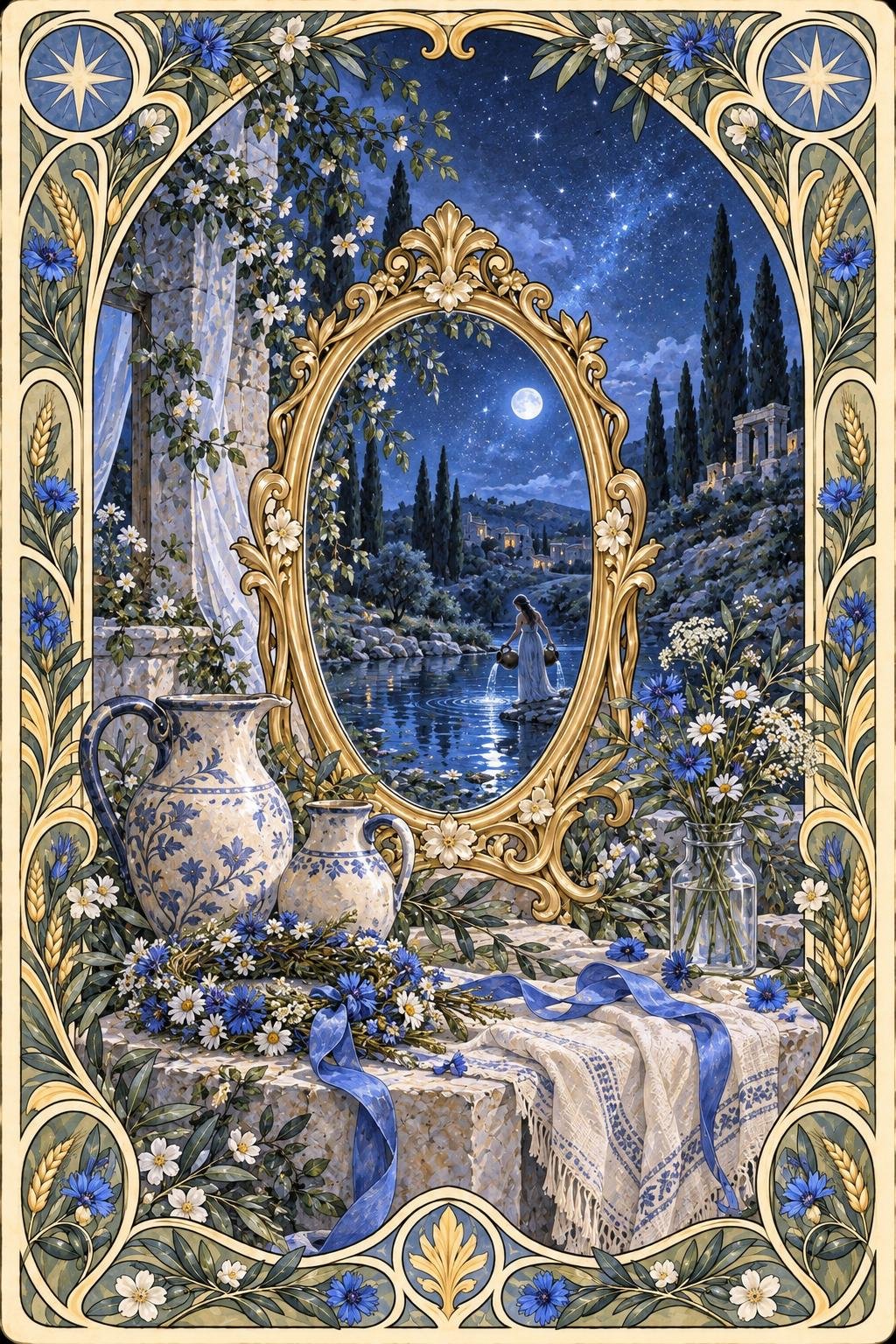
The woman kneels at the edge of a quiet pool, her knees pressed to the earth. With each hand she holds a pitcher, carefully tilting them to let water flow. Some pours into the pool, keeping it full and alive, while the rest streams onto the parched ground, sinking into cracks and vanished roots. Above her, the sky is open, clear. A great star burns with steady light, surrounded by seven smaller companions, as if watching over her patient work. The air is gentle, touched by coolness that hints at distant rain, and the promise in the sky echoes the promise in her act: something lost is returning.
In the untamed field beyond the pool, slender wildflowers grow between furrows left by last season’s plow. These plants, named for their star-like blossom, are the color of morning after a storm. For centuries, villagers have carried their seeds in apron pockets, scattering them along the borders of vegetable plots and barley rows. When the first blooms appeared, old women picked them at dawn, weaving their petals into garlands, hoping to bring calm to their households. Petals were slipped into letters sent across the sea, a sign that the sender’s heart was steady, that hope endured even when years passed before an answer came.
Farmers, reading the signs of weather in the way the flowers nodded on the breeze, trusted that where this plant thrived, the earth would recover from winter’s bite. Shepherds crossing mountain passes would sometimes find a patch of these blooms nodding beside a trickle of melted snow, and take it as a signal: spring had softened the land; the flock could graze. Monks, patient cultivators of walled gardens, crushed the dried heads into linen sachets, sewing them into the hems of pilgrims’ robes, believing the flower’s presence would ease a traveler’s fear and cool heated tempers.
In bustling market towns, merchants sold small bundles tied with twine, knowing city dwellers longed for a memory of open fields. Milliners, seeking inspiration, pressed the flowers onto wide-brimmed hats, and seamstresses stitched tiny petals into ribbons. On festival nights, a girl might tuck one behind her ear, while grandmothers dropped a handful into a bowl of rainwater to scent the house. In kitchens, a single petal steeped in honey gave a subtle sweetness to bread, or was pressed between the pages of a family recipe, marking the hope of another year’s harvest.
On steppes and heaths, the coming of fair weather was marked by the sudden appearance of these flowers beneath endless sky. The air would clear, the sun lingering before sinking, and shepherd children gathered the blooms, threading them into chains. Old men, remembering their youth, floated the flowers in their drinking water, saying it brought clarity of mind. The village healer, called to soothe a troubled spirit, might place the blossoms near a sleeping child, trusting their gentle promise.
Today, you can bring hope near by placing a wildflower at your desk or bedside, or by steeping a single petal in warm water to sip at sunset. Press a blossom in your pocketbook, or let it float in a bowl by the window, as a quiet sign of renewal and care.
Today's lucky color is CornflowerBlue.
Lucky Color: CornflowerBlue — #6495EDTrust the return of water to earth, and the gentle presence of resilient flowers.
The star above is echoed wherever hope is renewed.