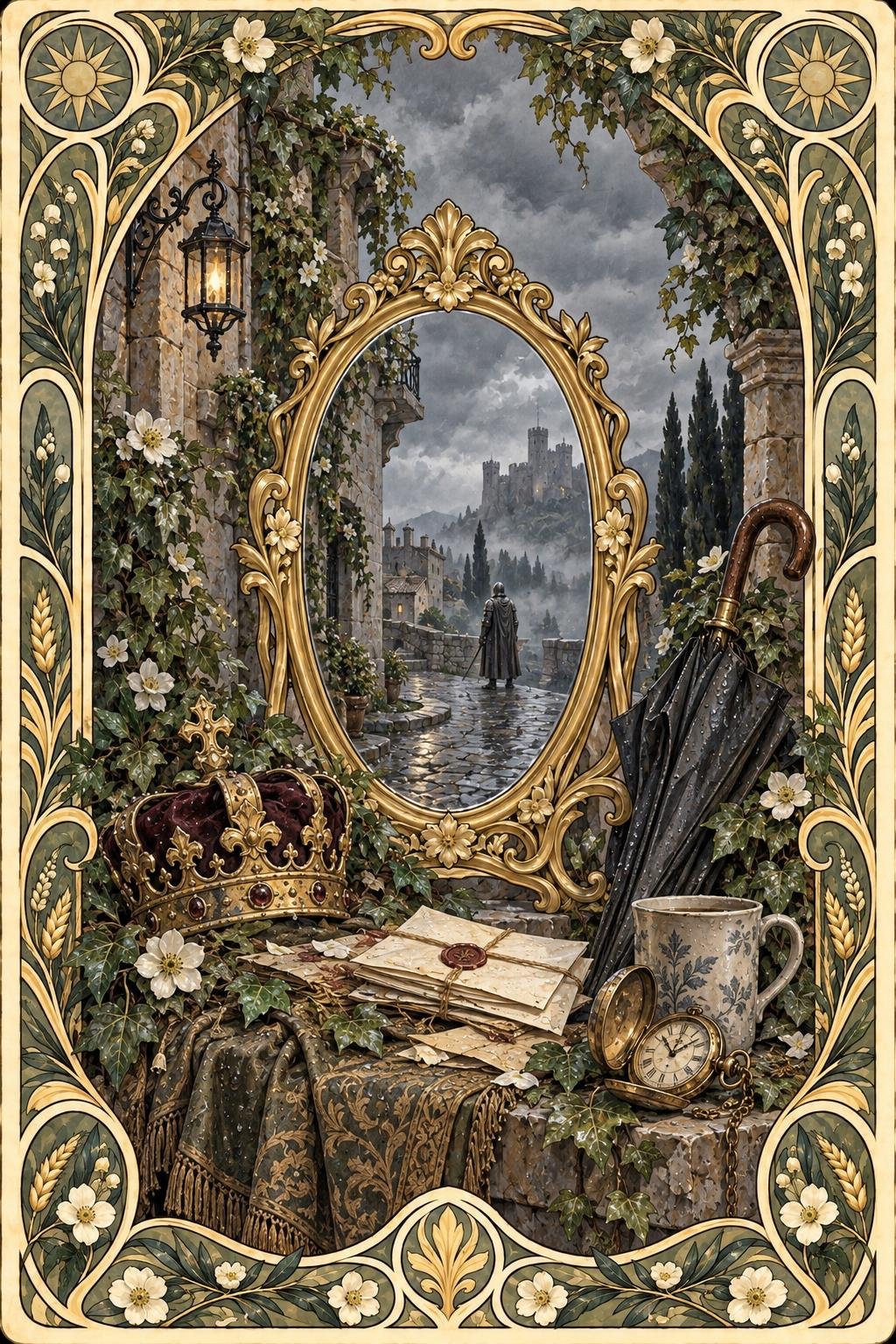
The ancient card lies inverted, its skeletal monarch failing to ride forward, stalled amid fields heavy with last year’s grass. The blade, once sharp for cutting away what is spent, hangs idle at the edge of a forgotten orchard. In one gaunt hand, a crown remains—tarnished, dented, but never set down. The horizon hints at morning, yet the shadows are long, stubborn, refusing release. Here, the air is cool and thick, the scent of old rain clinging to flat river stones and the low boughs of willow—places where the past gathers and will not budge.
There is a village by the northern fens where the roofs are shingled with slate, laid one atop another by hands now gone. Each morning, the mist rolls in from the marsh, swallowing the lanes in a hush. The ground stays damp all season, feeding a moss that curls around the feet of headstones bearing names worn down by centuries—names spoken only by the wind and the occasional church bell. Inside the cottages, iron kettles rest atop stoves, their surfaces marked by years of winter fires. They are sturdy, unyielding, the kind of pots passed from mother to daughter, refusing discard.
On certain days, the clouds press down so low they become a ceiling, their bellies smudged as if by soot. Shepherds on the moor recall times when storms would come from the east, driving flocks to shelter beneath the ancient standing stones, relics that keep their secrets even when the rain stops. The pathways between towns—those old Roman roads—are edged with pebbles dulled by endless footsteps, their stories muffled under the weight of years. This is a country that keeps its relics close, not out of honor, but because no one chose to clear them away.
In the storerooms of the manor, forgotten relics gather dust: a helmet from a soldier long dead, a candlestick with melted wax that will not be scraped clean, and a fur-lined cloak that once bore the burden of ceremony but now guards only moths. These things are kept out of reach of sunlight, in corners that the servants pass by without glance. Even in the fields, the plow sometimes strikes metal where an old ploughshare snapped and was left beneath the earth, now unearthed only to be set aside again, its use uncertain. The same reluctance blurs the line between tradition and habit, so weddings still echo with chants that few recall the meaning of, and the bread is baked in ovens blackened by fires from other eras.
A person, waking to this kind of weather, can walk down to the riverbank at dawn and skip a flat stone across the surface, listening for the echo—just to prove the day is new. They can take the kettle from the hearth and polish it, remembering that hands change, but some things must be let go to make space for what is next. It is worth gathering the old letters kept in the desk drawer, reading them aloud one last time before returning them to the fire. Sometimes, they may offer a silent thanks to the helmet, the candlestick, or the battered old cloak, then turn away from the storeroom and open the window wide, letting in what light there is.
Today's lucky color is DimGray.
Lucky Color: DimGray — #696969A day for gentle endings and quiet courage.
Let the old crown finally rest.