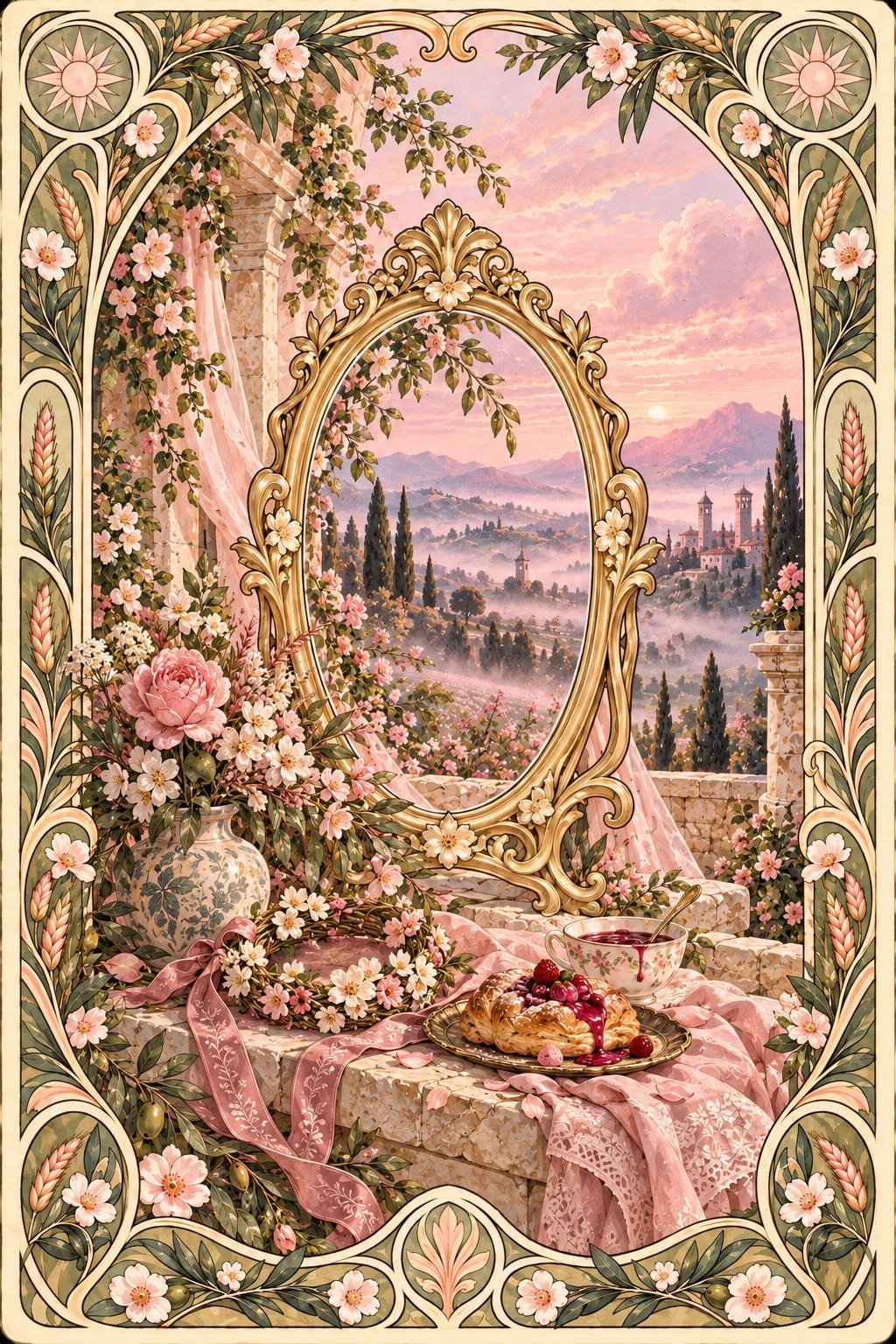
A rider moves forward, the horse steady, a pale blossom held in the hand, dawn just beginning to slip between two towers in the distance. There is no violence in this passage, only a hush as something closes and another outline waits to be drawn. The blossom, a carnation, has long been pressed between pages and given at partings, a token both of remembrance and of hope. The towers might be those seen from a quiet English downslope or the battered gates of an old European city, stone bookends to what has passed and to what is still to begin.
In ancient gardens, carnations were gathered at the end of harvest, their scent hanging in the air like a promise. In Greek myth, they were called "flowers of the gods," grown where Persephone once touched the earth before returning below. In silent monasteries, nuns grew them in walled plots, threading them into crowns for saints’ feasts and tucking sprigs into prayer books. They dried the petals for tinctures, believing these flowers could ease heartbreak and soothe transitions, small comforts for the living. In some places, carnations traveled across trade roads, tucked in the folds of silk handkerchiefs, exchanged in bustling marketplaces where fortunes were made and lost.
When the weather turns gentle after hard rain, and the morning is veiled in a fine mist, the world feels briefly suspended, as if one story has ended and the next waits just beyond the fog. The rider’s dawn is this kind of morning—cool, fresh, with petals dropping quietly onto the dew. For centuries, people have marked endings and beginnings with simple household gestures: a bar of rose-scented soap left near a basin, a towel embroidered with clusters of small, ruffled flowers. In a kitchen drawer, an old recipe for almond cakes is tucked beside a jar of preserved petals, a trace of sweetness reserved for times when renewal is needed most.
The carnation, though delicate, is resilient. In Old World cities, porters carried baskets of them to the doors of mothers who had lost children, and to the bedsides of those waking from fever. On festival days, girls wove chains of them for their hair, a sign that winter had passed and new growth was certain, even if the shape of life would never quite be the same. In quiet corners of the countryside, petals were scattered on graves and altar stones, a gentle assurance that nothing is wholly lost, but only turned to a quieter purpose.
For today, you might set a flower on your desk, or tuck a small bouquet into the pages of a letter not yet sent. You could bake something sweet with rosewater or keep a bar of flower-scented soap by the sink, breathing in the memory as you wash your hands. If you pass a garden, pause for a moment among the ruffled blossoms and let the air carry away what is finished so the next outline can begin.
Today's lucky color is Pink.
Lucky Color: Pink — #FFC0CBMay what ends bring the gentlest beginning. This is the color of quiet courage.