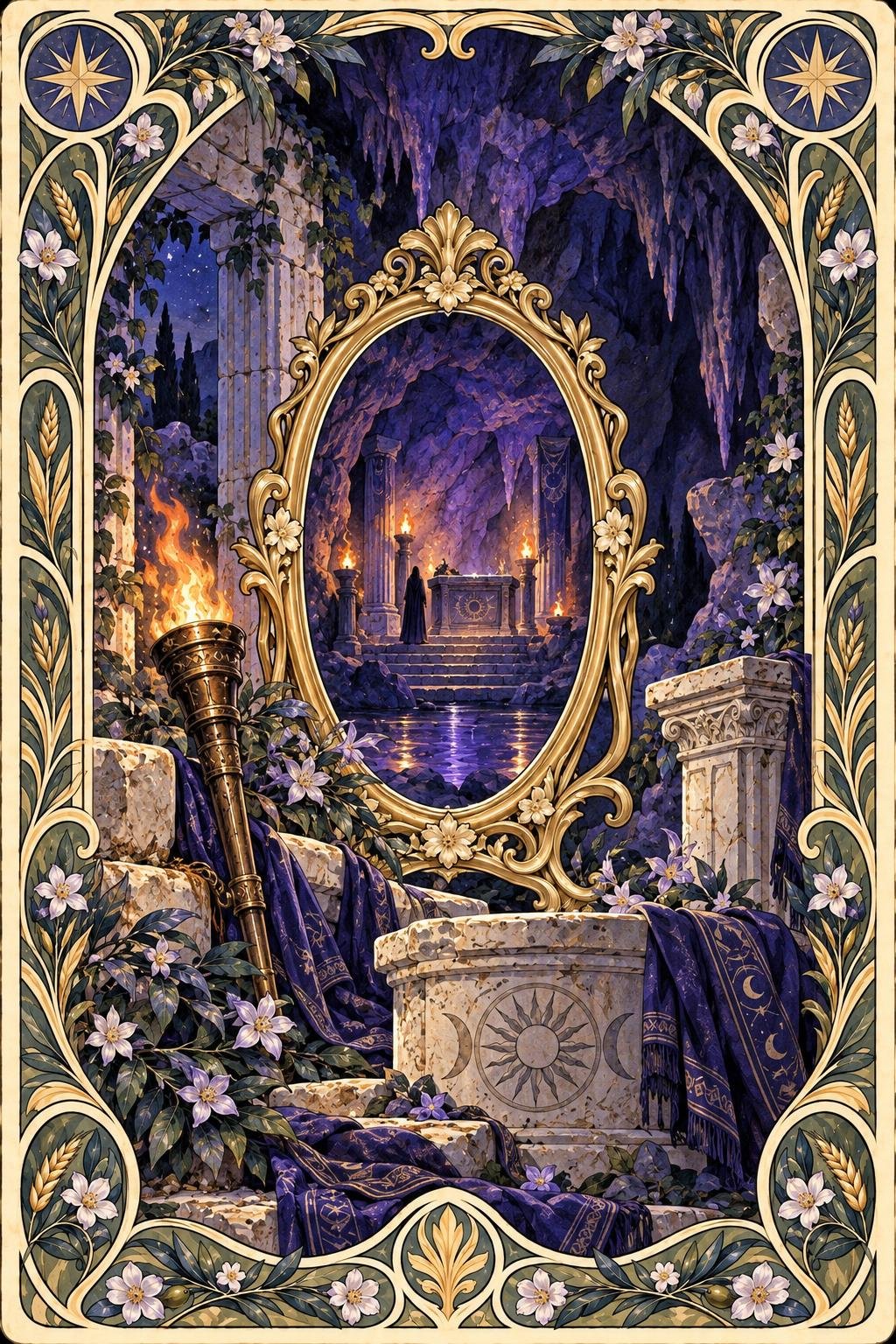
A figure stands atop a stone pedestal, muscles tense but unmoving, chains lying slack around its ankles. The torch it raises is not for destruction but for illumination, casting sharp edges along the floor and outlining the links that bind. Yet these chains do not strain against the skin; they rest loosely, as if waiting for the wearer to realize how little power they truly hold. Desire flickers here, visible in the torch’s flame, made tool rather than torment as long as it is acknowledged and understood.
In a different part of the world, fields stretch beneath a harsh sun, their harvest not food but a certain shrub with narrow leaves and small pods. When the time comes, workers bend low, gathering the crop and carrying armfuls to waiting vats. There, water and time begin their quiet work. The pods steep, releasing an earthy sweetness, an aroma that is equal parts soil and slow fermentation. With patience, a sediment forms, sifted and pressed, yielding a substance that will soon mark cloth and hands alike with its lasting presence.
From these distant fields, the cakes of pigment set out on their journey. Packed into crates, they rattle on the backs of donkeys, drift down muddy rivers in flat-bottomed boats, and cross oceans in the dim holds of merchant ships. This trade weaves fortunes and shapes empires. Markets hum as buyers inspect the pressed cakes, their surfaces dusty and rough. In shadowed workshops, dyers prepare cauldrons with careful hands, lowering hanks of thread and linen into deep, steaming baths, watching as the transformation begins. The cloth, when it emerges, is stamped with the memory of the earth, carrying with it the scent of distant storms and the sweat of those who toiled.
Twice each year, the weather turns abrupt and wild. In some seasons, rivers burst their banks and sweep away whole fields, threatening the fragile crop. Other years, long droughts parch the soil, threatening not just the harvest but the knowledge of how to coax color from plant to cloth. Those who know the process guard it carefully, passing it in hushed voices from mother to child, or hidden behind the walls of family compounds. Rulers and merchants have tried to control it, sometimes outlawing the crop, sometimes taxing its trade, but always, somewhere, a pot steeps quietly in defiance. The pigment becomes not just a commodity, but a legacy, a symbol of survival and cunning.
In the quiet of homes, tokens of this story remain. A length of dyed cloth is folded in the bottom drawer, kept for weddings and funerals. A mortar, its interior stained from grinding the dried pods, sits amid the kitchen’s tools, evidence of many seasons' work. Sometimes, when thunder grumbles far off, someone will boil a pot of pods and stems, letting the familiar scent rise through the air—a reminder that even what binds can be transformed by attention and will.
You might today set a scrap of dyed cloth in your wallet, or simmer a handful of pods just to fill your room with their scent. You could trace your fingertip along the inside of an old mortar, feeling the tiny grooves left by years of use, or read aloud a tale of how the pigment crossed continents and shaped fortunes. Each gesture is a way of loosening chains you may not have noticed.
Today's lucky color is Indigo.
Lucky Color: Indigo — #4B0082Desire’s tools are waiting for your hands.
The path is old, but the chains are loose.