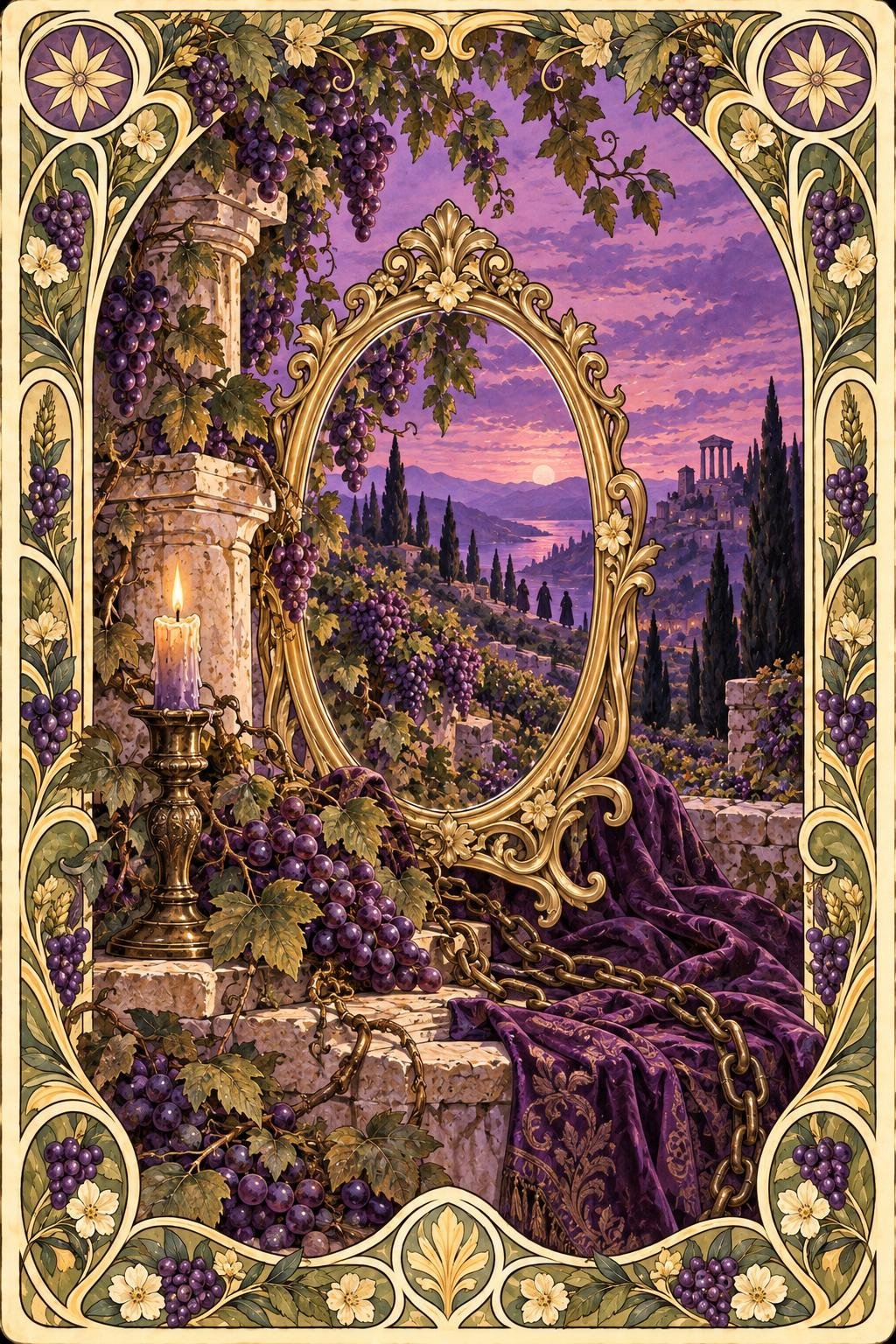
A pedestal stands at the center of the chamber, made of rough mountain stone, wide enough for an offering bowl. Firelight flickers from a torch mounted above, casting moving shadows across the wall. Chains lie coiled at the base, once tight but now fallen slack, as if waiting for someone to decide whether to step forward or retreat. Above, the torch’s flame burns with a steady hunger, inviting attention, promising both illumination and danger; the pedestal dares anyone to place their desire at the center, to examine it, to see it clearly.
In old stories, the torch is a badge of command that can both scorch and light the way. Prometheus, punished for gifting flame, was bound to stone, chained for transgressing the limits imposed by the gods. Yet the flame he brought changed the world, turning caves into homes and giving life to the craftsman’s forge. The pedestal beneath the torch becomes the craftsman’s table, a place of transformation. Desire, like fire, can be wielded for creation or for destruction; it is the hand that shapes clay, the vision that guides the weaver’s shuttle through the loom.
There is an empire in the east whose power was measured not only in swords and ships but in the rare dye drawn from the murex shell. That dye, reserved for emperors, priests, and the highest officials, travelled along the old sea roads, carried in sealed amphorae, guarded by decree and by fear. Garments colored with this dye were tokens of power and excess, draped over the shoulders of those who stood above ordinary law. The trade was secret, the source fiercely protected, the labor immense; a thousand shells for a single garment. But in quiet monasteries, monks would sometimes plant violets in their gardens, letting them grow near the base of the walls, their delicate blooms a quiet echo of the grandeur found in royal halls.
The name travels too, in the story of an English port town famous for its woven cloth, a trade that turned sheep’s wool into prized fabric carried through rain and wind to far-off markets. The wool-dyers’ guild would mix their vats, heating them over torches much like the one on the chamber wall, steam rising while the artisans watched for the moment when the cloth was changed and could take no more. These workshops stank of wet fleece and vinegar, but the results—robust, shimmering cloth—went into cloaks for merchants, altar veils for churches, and the hems of legal robes. The same resource that raised kings also sheltered shepherds against the moor’s raw wind.
Desire, too, is a tool: a rope that binds or a chain that can be loosened and cast away. It can be worn as a robe of authority, or as an amulet to touch in moments of doubt. When the chains are slack, the choice remains with the one who stands on the pedestal.
Today, a person can light a candle where they work and watch the flame, considering what they most wish for and what it costs. They can steep dried violets in hot water and sip the gentle infusion, remembering its journey from wilderness to cup. They might wrap themselves in a heavy woolen cloak, feeling the weight and warmth of tradition. Or they can write down something they desire and place it beneath a stone, letting the wish rest quietly for a while.
Today's lucky color is Purple.
Lucky Color: Purple — #800080Desire stands revealed, both a challenge and a tool.
Let the torch burn, and watch the chains grow slack.