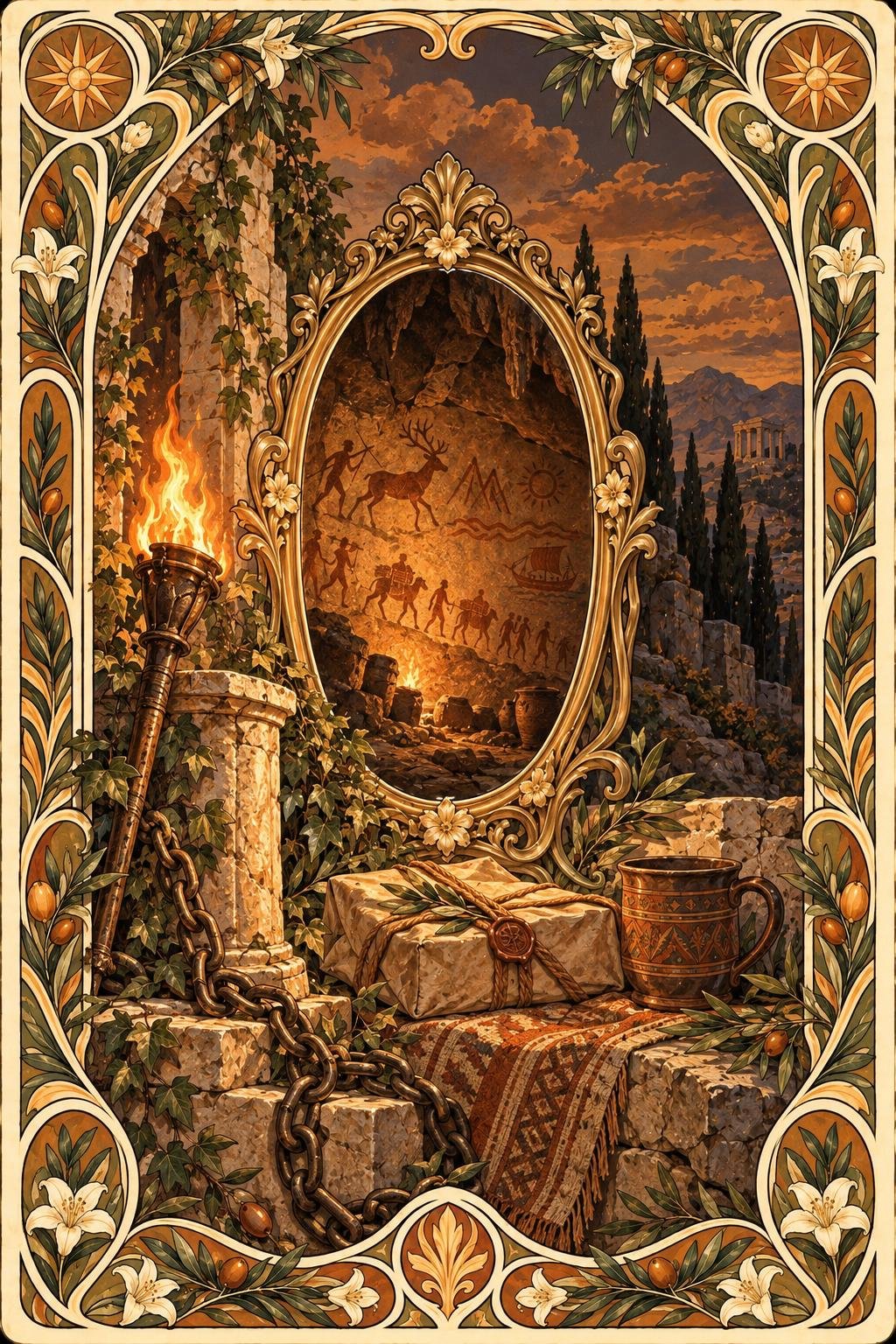
A throne rises in a dim chamber, set upon a pedestal of wood from the heart of a rain-soaked jungle. The legs are carved in the likeness of tendrils, and from their grip hang chains, forged not to bind but to threaten. At the center, a torch flares, throwing its light against the ancient beams. There is heat, but also the scent of something sweet and bitter—something that seeps into the stones and soothes the unease that flickers up from the ground. Desire, here, is not a monster but an ember, seen and named, a force that clings to the edges of ritual and feast.
In the ancient valleys where shadowed trees cluster, seeds gestate in pods as gnarled as a fist. The harvesters, skilled and tireless, pluck the fruit and slice it open, revealing the treasure within. Beans are sheltered in baskets, left to ferment in the sun, then roasted in stoves whose lids clang open with every storm. The air is thick with rain and the hum of insects, but inside the huts the workers ground the seeds into a coarse paste. Centuries ago, rulers of old cities sipped the resulting drink, perfumed and spiced, from vessels ornamented with serpent and jaguar. This was not a luxury but a tool—an elixir for courage before battle or passion before union, a means to stoke longing and ambition. Chains may be forged in the heat of want, but they can slip loose the moment their nature is understood.
The plant that gives its fruit to this alchemy does not thrive in cold or drought, but in the relentless, steamy flush of the equator. The cargoes that traveled to distant shores brought with them more than flavor—they carried stories of ceremony and trade, of rulers and rebels. In candlelit parlors of empires, the drink was transformed, sweetened, pressed into shapes that could be broken and shared. The shops that lined the rainy cobblestone streets grew rich on its sale; it entered the homes of the mighty and the modest alike. Even now, to break off a piece and let it melt is to taste a mingling of wild forest and fire, a reminder that what tempts can also nourish, if taken with open eyes.
A trader in the old marketplace would weigh bars and beans as carefully as he weighed his own ambitions. He might keep a stash hidden at the back of his storeroom—not to hoard, but to savor, letting desire become a companion rather than a captor. When the wind in late autumn brings a scent of earth and spice through the window, a family will gather in their kitchen, melting down a block over the stove, whipping it into a thick liqueur for dipping bread, or pouring it into tiny porcelain cups. The ritual is old and simple: to watch, to taste, to allow what is wanted to be fully seen.
If the torch burns low, stoke it. If the chains slip, notice if your own hands hold them. Break off a small piece of what you crave tonight and taste it slowly. Set a steaming cup beside your window during a rainstorm, and listen as the thunder passes over the roof.
Today's lucky color is Chocolate.
Lucky Color: Chocolate — #D2691EIn the presence of longing, carry the taste of the forest’s heart.
Let desire be seen, and the chains will loosen.