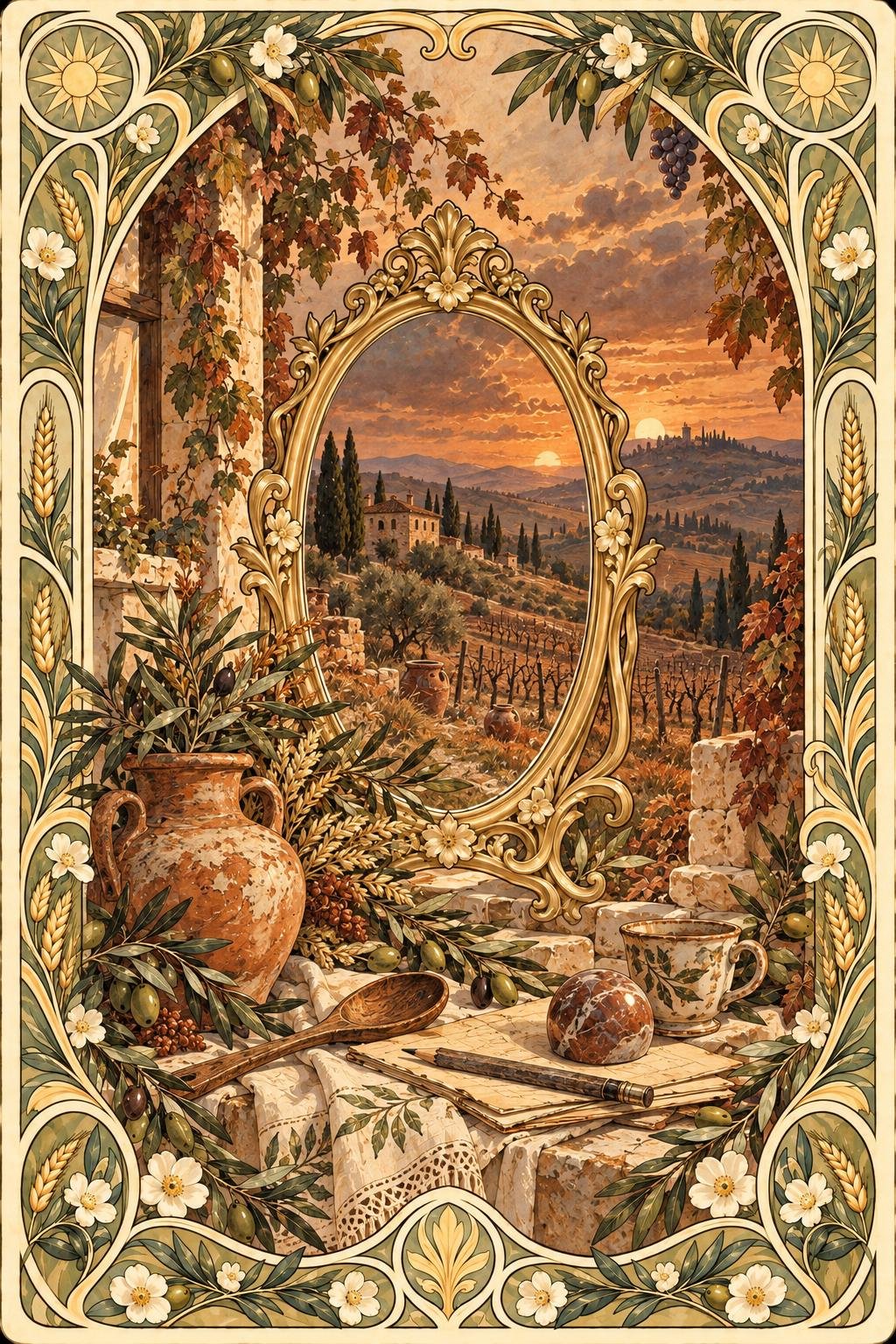
The Hierophant traditionally sits between two pillars, a figure of tradition and ritual, his hands raised in solemn teaching. When his seat is overturned, the pillars themselves crack; the stone dust scatters across the floor. The congregation in their pews shuffle and murmur, waiting for a pattern to appear, but the old phrases echo without resonance. The air, usually heavy with incense, thins. The repetition of rites continues, but the marrow of meaning has slipped away, leaving only sound and gesture.
Where ceremonies once grounded the community, their heart now lies elsewhere. What remains are the tangible pieces of the world, silent witnesses to change: the baked clay tiles running the length of the cloister, dry and rough to the touch, laid centuries ago by hands now unnamed. They remind one of the earth itself—hard, crumbly, reliable. In the kitchens, jars of pigment, ground from Tuscan soil, line the shelves next to loaves cooling on wooden boards. These loaves are round, dusted with the husks of ancient wheat, their crusts cracked from the kiss of the oven. In the hands of women rolling pasta on Sunday afternoons, memories of another land ripple: a chorus of laughter, a trailing scent of stewed tomatoes, the scrape of a wooden spoon in a pot fashioned by a local potter, his wheel spinning with the rhythm of old songs.
Travelers on the via Francigena, the old pilgrim road, see other signs. Hills rise and fall, patched with olive trees and vines, but at the base of each hill runs a seam of earth that stains the boots of those who pass. In the churches, medieval frescoes fade on the walls—stories painted in colors stubborn and enduring. No two days are the same here: sometimes the sky is clear and hard, sometimes a dry wind sweeps dust into corners and crevices, rasping against the shutters and the terracotta urns that mark the entrances to farmhouses and monasteries alike.
In the markets, merchants still trade small cakes flavored with almonds and honey, their crusts whispering of weathered hands and old recipes. The same hands might shape new vessels from earth, kneading the past into the present, blurring the line between ritual and necessity. Even the weather becomes a sign: afternoons when the sun lowers and the air is thick with the scent of hot earth after a brief, teasing rain, a promise never quite fulfilled.
When the forms lose their soul, attention shifts to what survives—touch, taste, the feel of an old jug in the palm, the sound of footsteps on sunbaked squares, the memory of a breeze carrying the aroma of fertile ground. Today, you might press your palm against a clay pot, breathe the steam rising from a pot of simmering beans, or trace the worn edge of a family heirloom bowl. You could look for a patch of earth to dig your fingers into, or write a letter on paper made from old rags, folded carefully and left on a sunlit table.
Today's lucky color is Sienna.
Lucky Color: Sienna — #A0522DLet the old world’s earth press into your hands.
The rite is changed by the weight of things.