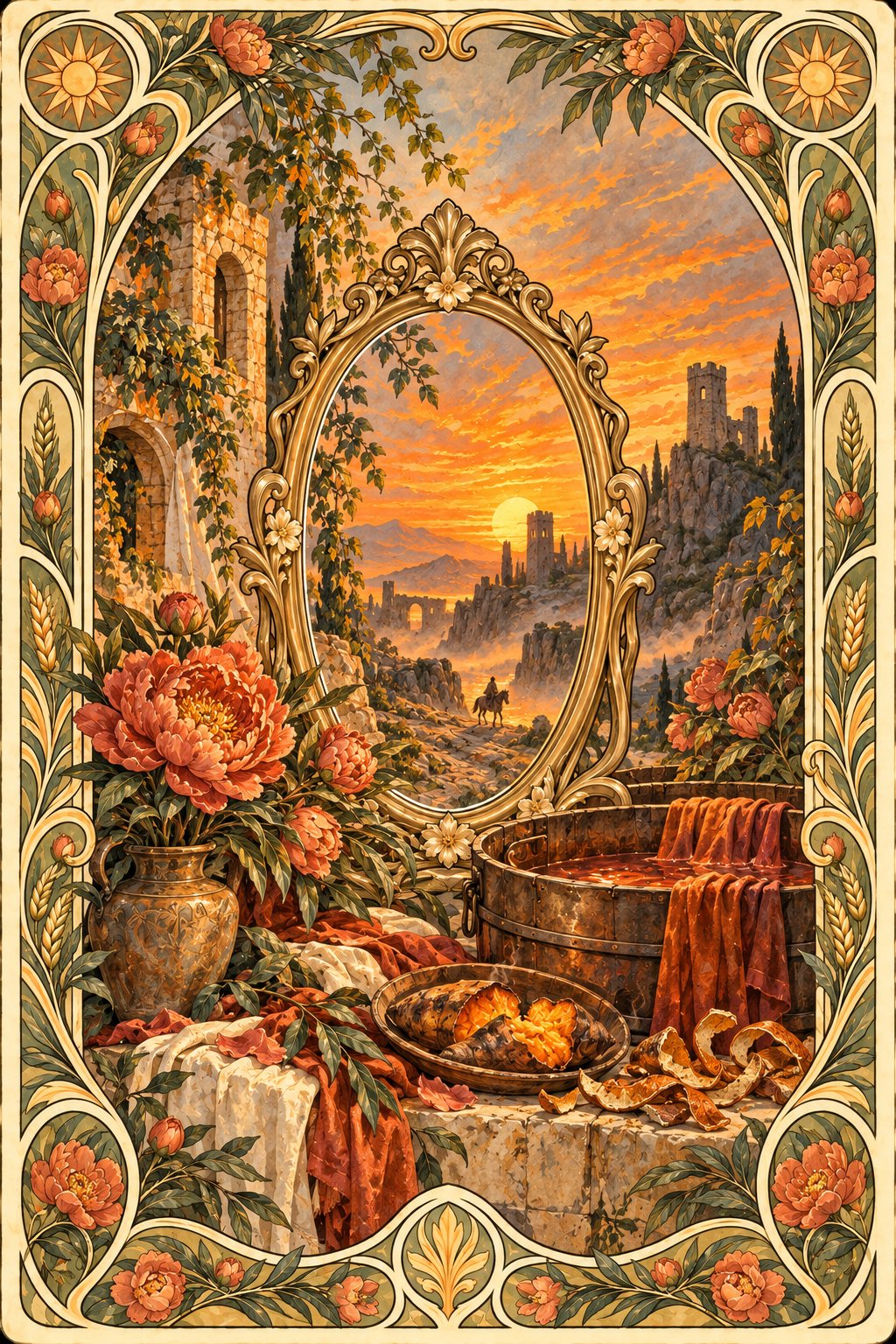
A mounted figure crosses the river’s edge, his flag quiet, the pale flower he holds seeming to open toward the horizon where two towers stand, and the first edge of dawn breaks between them. It is a moment between quiet and motion, the borderland where endings are not a failure but the pressing of a new outline into the world. The air tastes of earth and cinder, and something old gives way beneath the hooves of the horse, as if the day will only arrive after what came before is given to the ground.
In the far corners of Anatolia, where old roads run through wind-bent grasses, groves of wild apricot stand silent. Their fruit, wrinkled and flame-bright, collects in baskets at the close of summer. Local women, their hands strong from years of kneading dough, dry these apricots on flat stones, turning them under the sun until their sweetness deepens and their flesh grows dense and resilient. It is a ritual of preservation—yielding sustenance for the cold months, a promise that life continues by letting go of what is too ripe. These apricots, once halved and dried, travel far: into the pouches of traders on the Silk Road, into the hot ovens of bakers, into the hands of children whose laughter echoes in stone courtyards long after the apricot trees have lost their leaves.
On the highland plateaus of Oaxaca, women weave cloth from the fibers of the maguey plant. They dip threads in vats where they have boiled the rinds of bitter fruits and crushed petals from late blooms, coaxing a color that enters the fabric like memory seeping through bone. The shawls they make are given to wives at the beginning of marriage and to widows at its end. Each shawl, wrapped around shoulders against the mountain chill, marks both the leaving and the arriving. In their homes, these women tend small fires, feeding them with the heartwood of mesquite. The smoke rises in curling columns, scented and strong, carrying with it prayers for the departed and hope for the living. The embers beneath the pot glow, promising warmth but requiring the day’s ashes to be swept away before new flame can catch.
Elsewhere, in the western Sahara, the harmattan blows. This wind, carrying dust from the ancient lakebeds of Chad, sweeps across settlements and buries yesterday’s footprints. It is both a hardship and a renewal—the old is scoured, the air made sharp and clear, and the world tastes faintly of spice and iron. After the wind, traders clear their stalls, brushing sand from displays of dried persimmons and copper kettles. They start again, tracing new boundaries on the same familiar ground.
At the close of each day, a person can cut an apricot open and remember the hand that planted the seed. One can sweep ashes from the hearth, allowing space for the next meal’s fire. Wrapping oneself in a handwoven shawl, one can honor what is finished and face what must begin. When the wind clears the doorstep, stand and breathe in what has arrived, ready to mark the page newly.
Today's lucky color is DarkOrange.
Lucky Color: DarkOrange — #FF8C00A threshold, a fruit’s final gift, a warmth that outlasts the night.