A priest repeats his gestures in an empty hall, incense trailing in the cold air. The pillars behind him are carved with stories, but the voices that once filled them have wandered elsewhere, leaving stone and silence paired together. In this moment, the pattern remains but the reason has slipped, like a word forgotten just before it is spoken. What the priest once learned is now only a ritual of movement, the old meaning drawing away, turned by some invisible hand.
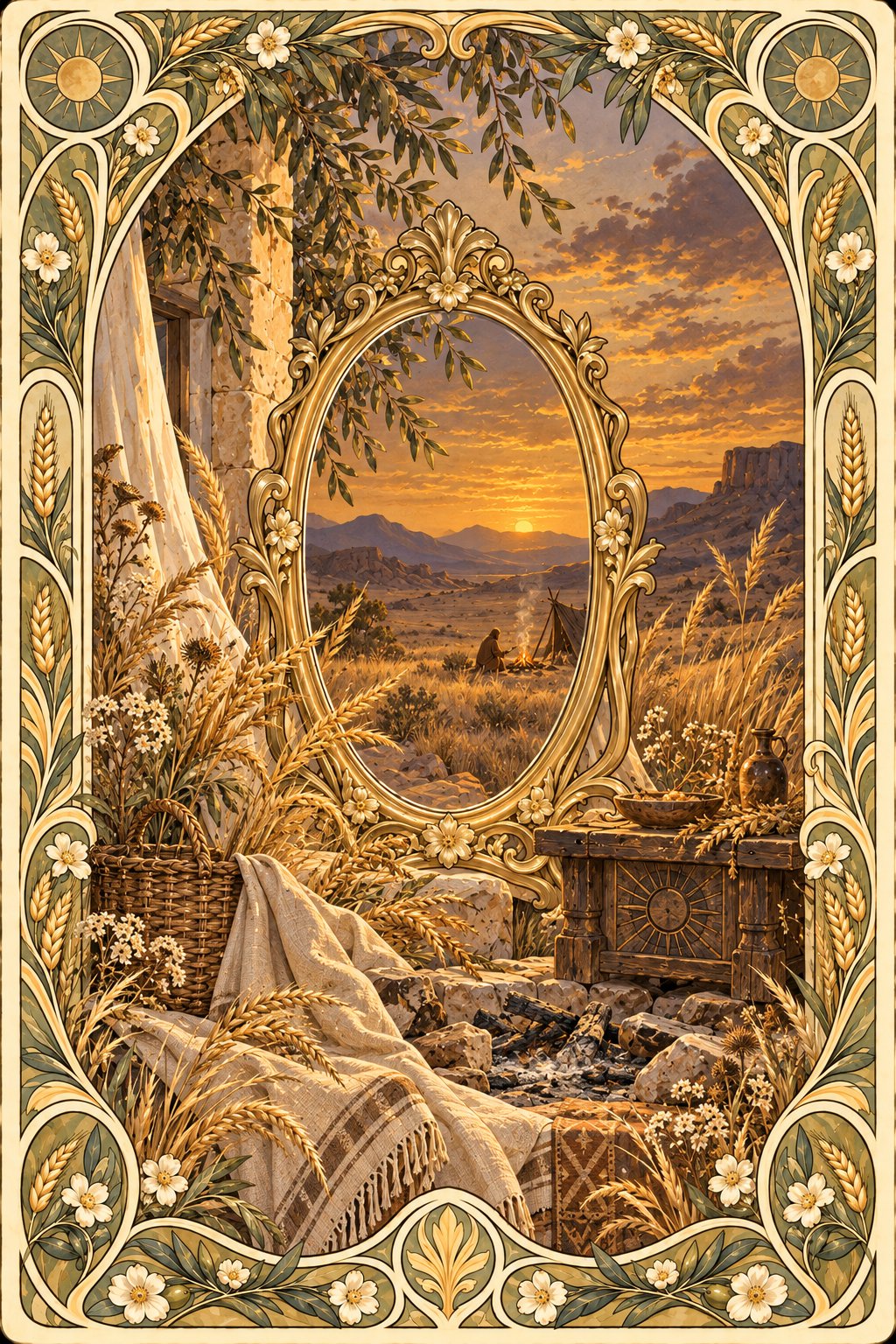
Beyond the walls, in dry meadows on the far edge of summer, tall stalks sway with their cluster-tipped crowns, plants known for their stubbornness and their ability to rise even when the soil is thin. Cattle once grazed here, and children braided the stems, weaving them into simple sashes as they marched toward Sunday school or local fairs. The wild plant, with its upright, nodding spears, has grown in the margins: beside railway ditches, on the untamed edges of fields, where the earth is overlooked and the plow stops short. It stands as a form repeated—year after year, the same shape returning, even if the hands that once picked it are gone.
There are times when thunderheads mass over the prairie, late afternoon turning charged and expectant. Lightning flickers through the haze, and a warm wind shakes the windows. Inside, a teacher draws the blinds and her voice becomes quiet, students restless as the storm presses against the world. The air smells of split stems and dust, and the memory of a late harvest lingers in the kitchen where an old wooden spoon stirs honey into thick porridge. Someone once said this plant could be boiled for tea, a folk remedy to clear the chest, though the taste is bitter and strong. The act is passed down, though the reason blurs. Even in the city, people gather it on the edges of parking lots, repeating the gesture of those who came before.
In the stories of old villages, the plant grew tall near the chapel steps, its roots threading through gravestones, its heads bending but never breaking. It is used to sweep out the hearth, woven into brooms by hands that remember only the method, not the reason. Some say the longer the stalk, the stronger the home, but the words have lost their weight, drifting into habit. Across the sea, traders once packed the dried stems as ballast, piling them in the hulls of riverboats and barges. They brought seeds from continent to continent, so that the same plant grows now by castle ruins and in the shadow of grain elevators. The rite of gathering, carrying, and weaving continues, as the original meaning finds new shadows to inhabit.
Today, you might walk to the edge of a field and gather a handful of sturdy stems, braiding them into a ring and placing it on your front door. You could simmer the dried heads with honey and lemon, pouring the tea into a chipped cup as dusk falls. Sweep your porch with a small broom made of these stalks, or press a sprig between the pages of a well-thumbed book, letting the old ways echo in quiet, concrete gestures. The form persists; meaning waits to be found.
Today's lucky color is DarkGoldenRod.
Lucky Color: DarkGoldenRod — #B8860BThere is strength in the pattern, even when the story flickers.
Repeat the rite and watch what grows.